






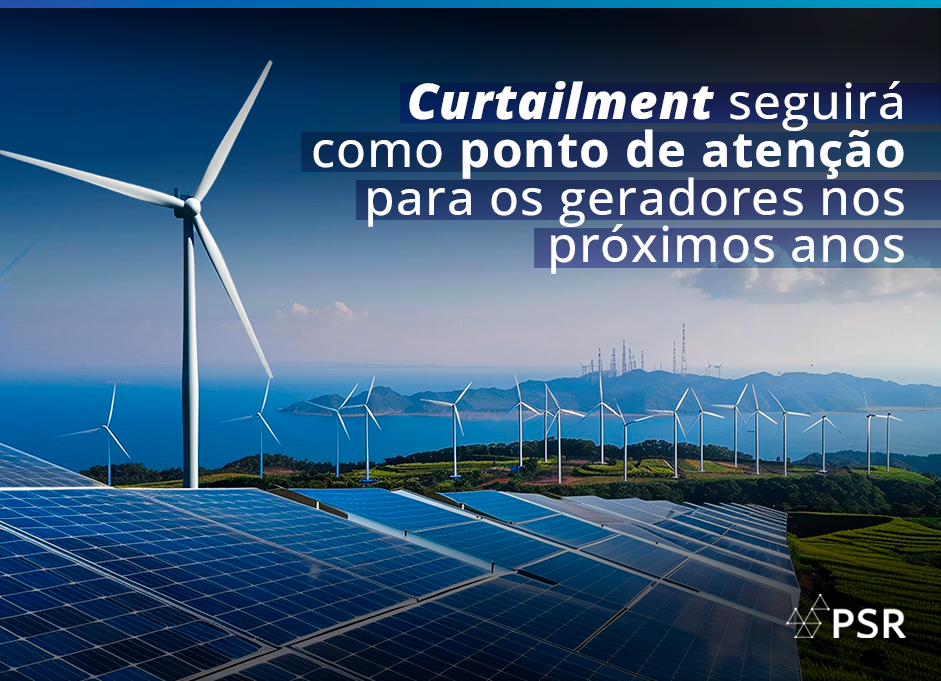
Even with the forecast of the construction of important transmission lines auctioned in recent years, PSR projections indicate that curtailment will be frequent as long as the energy supply continues to grow at a faster rate than demand in the country. “In 2024, for example, the oversupply of energy could reach 25%, with an average supply of around 100 GW for an average demand of 80 GW, forcing the operator to cut energy generation,” – says Jairo Terra, head of Regulation and Litigation at PSR.
Curtailment has different dynamics and impacts for different sources. In the case of intermittent renewable sources, such as wind and solar plants, the measure has a direct commercial consequence for the agents, since the cut impacts the fulfillment of the contracts of the projects and the economic viability of the projects. For hydroelectric plants, the effect is shared among the agents of the same type, since the cut has an impact on the energy reallocation mechanism (MRE), reducing the total energy to be shared by it.
Thus, the frequency and intensity of curtailment have had repercussions on the operational and financial results of energy generators in the country and, consequently, led to lawsuits in court or in arbitration chambers.
With 36 years of experience, PSR has been focusing on the subject, working with several players and institutions. PSR is recognized for its technical, regulatory and simulation capacity on the subject, based on a portfolio of state-of-the-art analytical tools. The PSR team develops regulatory studies, risk assessments and financial impacts on general and custom curtailment.
Learn more here.