






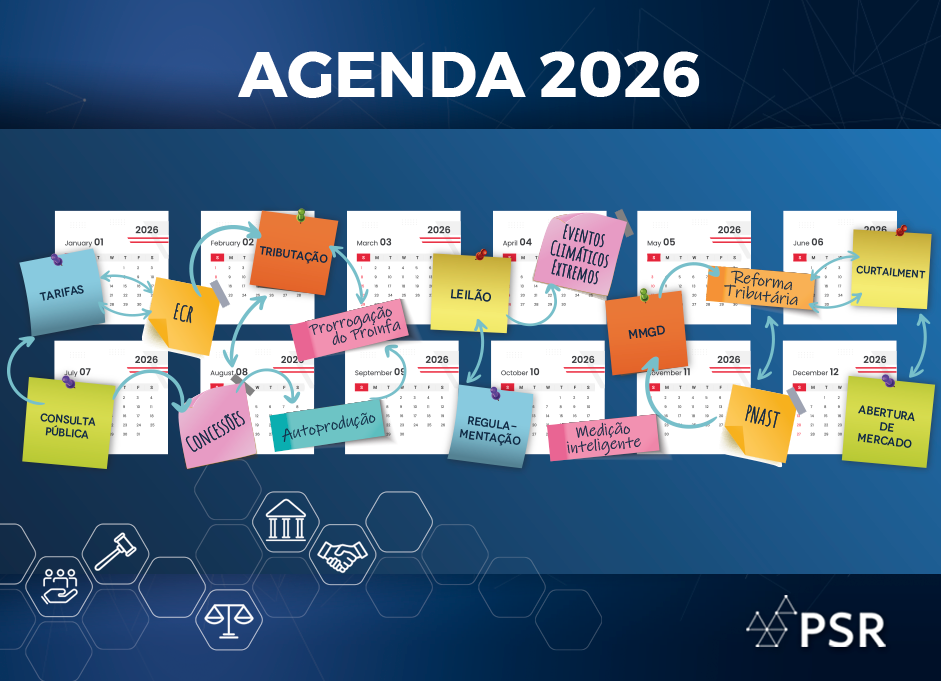
The electricity sector’s agenda in 2026 will be marked by an unusual combination of legal issues, mandatory deadlines, and political and climate uncertainties. Regulation of Law No. 15,269/2025, full market opening, developments in the Tax Reform, capacity auctions, curtailment, institutional modernization, and the potential impacts of extreme events make up a scenario that demands coordination and execution capacity from sectoral institutions.
This is the starting point of the Opinion section of the January edition of the Energy Report, which analyzes the main themes that will dominate the discussion agenda throughout the year. The editorial highlights that 2026 will not just be another year of debates: it is a period in which several issues that have been discussed for decades will require implementation, and within legal deadlines.
The text also contextualizes the agenda within a domestic political environment marked by elections and an unstable external geopolitical scenario, with potential impacts on international trade, supply chains, and energy costs. Added to this is the advancement of artificial intelligence, which influences both the expansion of demand and new possibilities for operational efficiency in the sector.
At the same time, the editorial acknowledges that “known surprises,” such as extreme weather events or water crises, can alter priorities and require emergency responses, reinforcing the need for regulatory flexibility and institutional coordination.
The January 2026 edition of the Energy Report, “The 2026 Sector Agenda: Everything, Everywhere, All at the Same Time,” is now available to subscribers.
Other highlights of the edition
In addition to the analysis of the 2026 sector agenda, this edition of the bulletin also addresses:
- Water Resources – Water management in Japan and the G-Cans system, a world reference in flood control.
- Energy Transformation – The need to recalibrate public and private policies aimed at the energy transition.
- International – Global trade tensions and the disruption of the Colombia-Ecuador interconnection.
- Innovation – Agriculture as economic infrastructure for the energy transition.
- Geonomics – The role of ethanol in maritime transport and the geopolitical constraints of energy transformation.
- The Material World – The challenge of transforming Brazil’s geological potential, especially in copper, into industrial sovereignty.
- Structural Analysis of Supply – The updated balance between structural energy supply and demand and the traditional delay meter.
The Energy Report is a PSR publication exclusively for subscribers. Suggestions and comments can be sent to energyreport@psr-inc.com.