







Edições do Energy Report
Home > Edições do Energy Report > Page 13
Confira as edições do Energy Report e fique por dentro das tendências, desafios e inovações que estão moldando o futuro do setor energético.
Ainda não é assinante? Clique aqui e saiba como acessar o conteúdo completo do Energy Report.
Edições de 2025
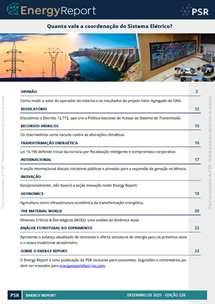
How much is the coordination of the electric power system worth?
MES
December
EDICIÓN
228
How to measure the value of the system operator and the results of ONS’s Value Added project.
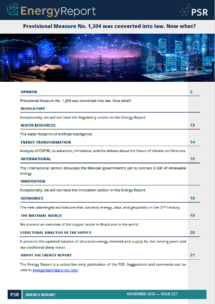
Provisional Measure No. 1,304 has been enacted into law. So what now?
MES
November
EDICIÓN
227
Provisional Measure No. 1,304 has been converted into law. What changes now?
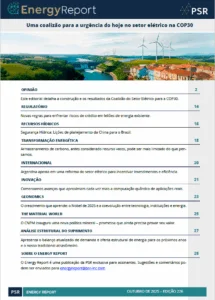
A COALITION FOR TODAY’S URGENCY IN THE POWER SECTOR AT COP30
MES
October
EDICIÓN
226
This editorial details the construction and results of the Power Sector Coalition for COP30.
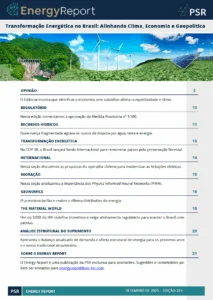
BRAZIL’S ENERGY TRANSITION: ALIGNING CLIMATE, ECONOMY, AND GEOPOLITICS
MES
September
EDICIÓN
225
The Editorial argues that unsubsidized electrification aligns competitiveness and climate goals.
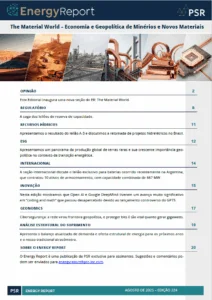
THE MATERIAL WORLD — ECONOMICS AND GEOPOLITICS OF MINERALS AND NEW MATERIALS
MES
August
EDICIÓN
224
This Editorial inaugurates a new section of ER: The Material World.
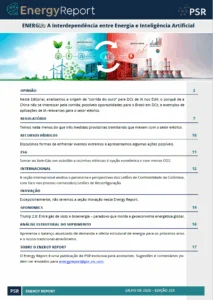
THE INTERDEPENDENCE BETWEEN ENERGY AND ARTIFICIAL INTELLIGENCE
MES
July
EDICIÓN
223
In this Editorial, we analyze the origin of the “gold rush” for AI DCs in the USA; why China is not interested in the race; possible opportunities for Brazil in DCs; and examples of relevant AI applica-tions for the electrical sector.
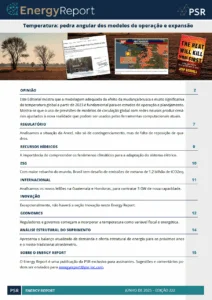
TEMPERATURE: CORNERSTONE OF OPERATION AND EXPANSION MODELS
MES
June
EDICIÓN
222
This Editorial demonstrates that adequate modeling of the effects of the sudden and significant change in global temperature from 2023 onward is crucial for operational and planning studies. It demonstrates that the use of global circulation model forecasts with neural networks produces scenarios adjusted to the new reality that can be used with current computational tools.
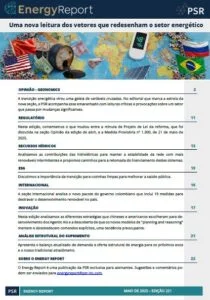
A NEW READING OF THE VECTORS THAT REDESIGN THE ENERGY SECTOR
MES
May
EDICIÓN
221
The energy transition has become a jumble of intersecting variables. In the editorial marking the debut of the new section, PSR explores this tangle with critical readings and provocative insights into a sector undergoing significant change.
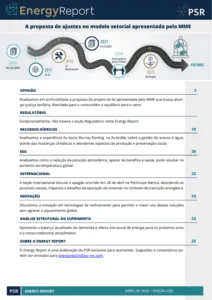
THE PROPOSAL FOR ADJUSTMENTS TO THE SECTORAL MODEL PRESENTED BY THE MME
MES
April
EDICIÓN
220
We analyzed in depth the bill proposed by the Ministry of Mines and Energy (MME), which seeks to achieve tariff justice, freedom for consumers, and balance for the sector.
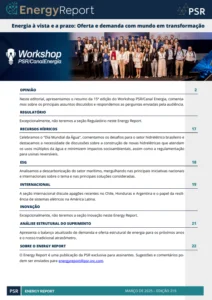
SPOT AND TERM ENERGY: SUPPLY AND DEMAND IN A TRANSFORMING WORLD
MES
March
EDICIÓN
219
In this editorial, we present a summary of the 15th edition of the PSR/Canal Energia Workshop, comment on the main topics discussed, and answer questions submitted by the audience.
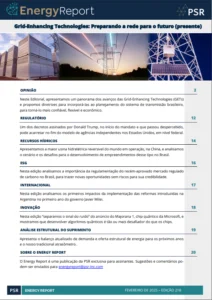
GRID-ENHANCING TECHNOLOGIES: PREPARING THE NETWORK FOR THE FUTURE (PRESENT)
MES
February
EDICIÓN
218
In this Editorial, we present an overview of advances in Grid-Enhancing Technologies (GETs) and propose guidelines for incorporating them into the planning of the Brazilian transmission system, to make it more reliable, flexible, and economical.
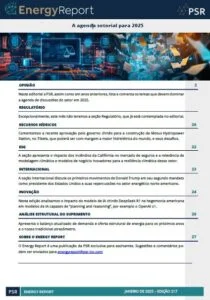
THE SECTORAL AGENDA FOR 2025
MES
January
EDICIÓN
217
In this editorial, PSR, as in previous years, lists and comments on the topics that should dominate the sector’s discussion agenda in 2025.
Edições de 2024
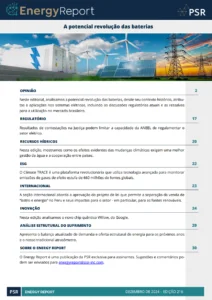
THE POTENTIAL BATTERY REVOLUTION
MES
December
EDICIÓN
216
In this editorial, we analyze the potential battery revolution, from its historical context, attributes and applications in electrical systems, including current regulatory discussions and caveats for use in the Brazilian market.
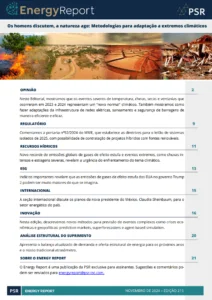
MEN DISCUSS, NATURE ACTS: METHODOLOGIES FOR ADAPTATION TO CLIMATE EXTREMES
MES
November
EDICIÓN
215
In this Editorial, we demonstrate that the severe temperature, flood, drought, and wind events that occurred in 2023 and 2024 represent a “new normal” in climate. We also demonstrate how to efficiently and effectively adapt infrastructure such as electricity grids, sanitation, and dam safety.
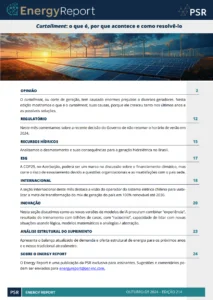
CURTAILMENT: WHAT IT IS, WHY IT HAPPENS AND HOW TO SOLVE IT
MES
October
EDICIÓN
214
Curtailment, or generation outages, have caused enormous losses to many generators. In this edition, we explain what curtailment is, its causes, why it has grown so much in recent years, and possible solutions.
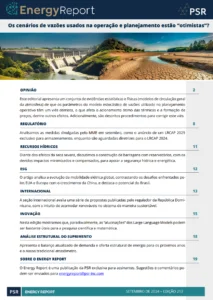
ARE THE FLOW SCENARIOS USED IN OPERATION AND PLANNING “OPTIMISTIC”?
MES
September
EDICIÓN
213
This editorial presents a set of statistical and physical evidence (general atmospheric circulation models) that the parameters of the stochastic flow model used in operational planning have an optimistic bias, which affects the optimal activation of thermal power plants and price formation, among other effects. Additionally, procedures to correct this bias are described.
ENERGY FOR DATA CENTERS – CAN BRAZIL BE A “DATA COUNTRY”?
MES
August
EDICIÓN
212
This editorial describes the accelerated energy consumption in data centers worldwide, driven by AI applications, and analyzes opportunities and challenges for the installation of DCs in Brazil.
COP30: A BRAZIL OF OPPORTUNITIES FOR THE ENERGY TRANSITION
MES
July
EDICIÓN
211
In this editorial, we showcase several of the country’s “energy jabuticabas,” which align economic competitiveness with environmental benefits and could be a “calling card” for Brazil’s potential at COP30.
LEGAL FRAMEWORK FOR AN UNCERTAIN HYDROGEN MARKET
MES
June
EDICIÓN
210
This article discusses the Hydrogen Legal Framework bill and its progress against the global scenario of hydrogen market evolution.
HYDROELECTRIC PLANTS 3.0 – OPPORTUNITIES AND CHALLENGES
MES
May
EDICIÓN
209
In this Editorial, we will analyze various opportunities and needs for transforming our hydroelectric system due to factors such as climate change (extreme droughts and floods), flexibility and storage services, new synergies between hydroelectric plants and solar generation, and others.
TWENTY YEARS OF ENERGY AUCTIONS
MES
April
EDICIÓN
208
The law that made energy auctions the engine for expanding supply is twenty years old. It’s a good time to take stock.
ELECTRIFY EVERYTHING – NEW TECHNOLOGIES TO DECARBONIZE THE ECONOMY
MES
March
EDICIÓN
207
In this edition, we analyze the advances of new electrification technologies in the economic decarbonization of many sectors, such as industrial heat. These advances have led some experts to propose a general electrification of the economy, known as “electrify everything.”
ENERGY TRANSFORMATION: MITIGATION, ADAPTATION AND PRAGMATIC AMBITION
MES
February
EDICIÓN
206
In this Editorial, we demonstrate the need to comprehensively consider both the opportunities posed by climate change, such as the export of green products, and the risks and losses resulting from adverse climate events such as those that occurred in 2023.
THE SECTORAL AGENDA FOR 2024
MES
January
EDICIÓN
205
In this editorial, PSR, as in previous years, lists and comments on the topics that should dominate the sector’s discussion agenda in 2024.
Edições de 2023

PLANNING TRANSMISSION FOR THE NET ZERO FUTURE
MES
April
EDICIÓN
196
In this editorial, PSR discusses the necessary changes in the transmission sector for countries to achieve their net zero agenda.

CAN BRAZIL'S ELECTRICITY MATRIX BE 100% DECARBONIZED?
MES
May
EDICIÓN
197
This Editorial discusses the results of a World Bank study on the technical feasibility and “green premium” of different decarbonization policies up to 2050.

ENERGY – APPLICATIONS OF ARTIFICIAL INTELLIGENCE IN THE ELECTRICITY SECTOR
MES
June
EDICIÓN
198
In this Editorial we present a brief history of the development of Artificial Intelligence (AI) from its origins seventy years ago to the present day with ChatGPT/GPT-4, and we describe several applications in the energy sector, both existing and promising.

THE ROLE OF CORPORATIONS IN THE CLIMATE AGENDA
MES
July
EDICIÓN
199
In this edition of ER, we show how corporations can make a significant contribution to tackling climate change and introduce GreenVision, a one-stop shop to support businesses.

THE AUGUST 15 BLACKOUT: SEPARATING THE SIGNAL FROM THE NOISE
MES
August
EDICIÓN
200
In this Editorial, we analyze the operational, planning, and regulatory challenges for the inclusion of renewables, in light of the August 15 blackout.

CARBON MARKETS: CHALLENGES AND OPPORTUNITIES
MES
September
EDICIÓN
201
In this Editorial, we present a series of measures that can strengthen the effectiveness and credibility of so-called “nature-based solutions” in carbon markets, which are of great interest to Brazil and, especially, to the Amazon.

CAN AN UNEXPECTED CMOS SPIKE SIGNAL SUPPLY PROBLEMS?
MES
October
EDICIÓN
202
Based on an analysis of the increase in CMOs in September, the Editorial shows that ONS has much more limited hydroelectric resources than previously thought; and that there may be new activations in the coming months, with significant costs for consumers.

BILL NO. 11,247/2018 AND ITS TORTOISES
MES
December
EDICIÓN
204
In this edition, we quantify in detail the additional direct costs to consumers if eight amendments included in Bill 11.247 are enacted into law. This analysis was commissioned by a group of associations representing all segments of the electricity sector.

CLIMATE CHANGE AND DISTRIBUTION: SUGGESTIONS FOR A TECHNICAL AND REGULATORY AGENDA
MES
November
EDICIÓN
203
This Editorial identifies possible elements of a technical (technologies, methodologies, and criteria) and regulatory agenda that will allow the distribution sector to improve its ability to cope with extreme weather events, mitigating the severity of supply interruptions.
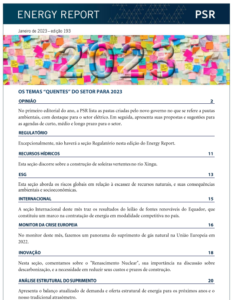
THE SECTOR'S "HOT" TOPICS FOR 2023
MES
January
EDICIÓN
193
In its first editorial of the year, the PSR lists the departments created by the new government regarding environmental issues, with a focus on the electricity sector. It then presents its proposals and suggestions for the sector’s short-, medium-, and long-term agendas.
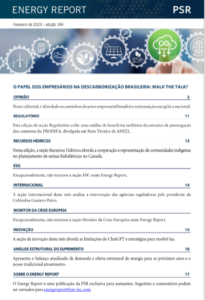
THE ROLE OF BUSINESSMEN IN BRAZILIAN DECARBONIZATION: WALK THE TALK?
MES
February
EDICIÓN
194
This editorial addresses the paths taken by the Brazilian business sector in the national energy transition.

EVERYTHING YOU ALWAYS WANTED TO KNOW ABOUT THE MINIMUM PLD, BUT WERE AFRAID TO ASK
MES
March
EDICIÓN
195
The Editorial of this Energy Report contributes to the debate on the calculation of the minimum PLD, recovering the history of its creation and proposing a structural solution from 2024 onwards.
Outras edições
Edições de 2022
MES
April
EDICIÓN
196
In this editorial, PSR discusses the necessary changes in the transmission sector for countries to achieve their net zero agenda.
MES
May
EDICIÓN
197
This Editorial discusses the results of a World Bank study on the technical feasibility and “green premium” of different decarbonization policies up to 2050.
MES
June
EDICIÓN
198
In this Editorial we present a brief history of the development of Artificial Intelligence (AI) from its origins seventy years ago to the present day with ChatGPT/GPT-4, and we describe several applications in the energy sector, both existing and promising.
MES
July
EDICIÓN
199
In this edition of ER, we show how corporations can make a significant contribution to tackling climate change and introduce GreenVision, a one-stop shop to support businesses.
MES
August
EDICIÓN
200
In this Editorial, we analyze the operational, planning, and regulatory challenges for the inclusion of renewables, in light of the August 15 blackout.
MES
September
EDICIÓN
201
In this Editorial, we present a series of measures that can strengthen the effectiveness and credibility of so-called “nature-based solutions” in carbon markets, which are of great interest to Brazil and, especially, to the Amazon.
MES
October
EDICIÓN
202
Based on an analysis of the increase in CMOs in September, the Editorial shows that ONS has much more limited hydroelectric resources than previously thought; and that there may be new activations in the coming months, with significant costs for consumers.
MES
December
EDICIÓN
204
In this edition, we quantify in detail the additional direct costs to consumers if eight amendments included in Bill 11.247 are enacted into law. This analysis was commissioned by a group of associations representing all segments of the electricity sector.
MES
November
EDICIÓN
203
This Editorial identifies possible elements of a technical (technologies, methodologies, and criteria) and regulatory agenda that will allow the distribution sector to improve its ability to cope with extreme weather events, mitigating the severity of supply interruptions.
MES
January
EDICIÓN
193
In its first editorial of the year, the PSR lists the departments created by the new government regarding environmental issues, with a focus on the electricity sector. It then presents its proposals and suggestions for the sector’s short-, medium-, and long-term agendas.
MES
February
EDICIÓN
194
This editorial addresses the paths taken by the Brazilian business sector in the national energy transition.
MES
March
EDICIÓN
195
The Editorial of this Energy Report contributes to the debate on the calculation of the minimum PLD, recovering the history of its creation and proposing a structural solution from 2024 onwards.
Edições de 2021
MES
April
EDICIÓN
196
In this editorial, PSR discusses the necessary changes in the transmission sector for countries to achieve their net zero agenda.
MES
May
EDICIÓN
197
This Editorial discusses the results of a World Bank study on the technical feasibility and “green premium” of different decarbonization policies up to 2050.
MES
June
EDICIÓN
198
In this Editorial we present a brief history of the development of Artificial Intelligence (AI) from its origins seventy years ago to the present day with ChatGPT/GPT-4, and we describe several applications in the energy sector, both existing and promising.
MES
July
EDICIÓN
199
In this edition of ER, we show how corporations can make a significant contribution to tackling climate change and introduce GreenVision, a one-stop shop to support businesses.
MES
August
EDICIÓN
200
In this Editorial, we analyze the operational, planning, and regulatory challenges for the inclusion of renewables, in light of the August 15 blackout.
MES
September
EDICIÓN
201
In this Editorial, we present a series of measures that can strengthen the effectiveness and credibility of so-called “nature-based solutions” in carbon markets, which are of great interest to Brazil and, especially, to the Amazon.
MES
October
EDICIÓN
202
Based on an analysis of the increase in CMOs in September, the Editorial shows that ONS has much more limited hydroelectric resources than previously thought; and that there may be new activations in the coming months, with significant costs for consumers.
MES
December
EDICIÓN
204
In this edition, we quantify in detail the additional direct costs to consumers if eight amendments included in Bill 11.247 are enacted into law. This analysis was commissioned by a group of associations representing all segments of the electricity sector.
MES
November
EDICIÓN
203
This Editorial identifies possible elements of a technical (technologies, methodologies, and criteria) and regulatory agenda that will allow the distribution sector to improve its ability to cope with extreme weather events, mitigating the severity of supply interruptions.
MES
January
EDICIÓN
193
In its first editorial of the year, the PSR lists the departments created by the new government regarding environmental issues, with a focus on the electricity sector. It then presents its proposals and suggestions for the sector’s short-, medium-, and long-term agendas.
MES
February
EDICIÓN
194
This editorial addresses the paths taken by the Brazilian business sector in the national energy transition.
MES
March
EDICIÓN
195
The Editorial of this Energy Report contributes to the debate on the calculation of the minimum PLD, recovering the history of its creation and proposing a structural solution from 2024 onwards.
Edições de 2020
MES
April
EDICIÓN
196
In this editorial, PSR discusses the necessary changes in the transmission sector for countries to achieve their net zero agenda.
MES
May
EDICIÓN
197
This Editorial discusses the results of a World Bank study on the technical feasibility and “green premium” of different decarbonization policies up to 2050.
MES
June
EDICIÓN
198
In this Editorial we present a brief history of the development of Artificial Intelligence (AI) from its origins seventy years ago to the present day with ChatGPT/GPT-4, and we describe several applications in the energy sector, both existing and promising.
MES
July
EDICIÓN
199
In this edition of ER, we show how corporations can make a significant contribution to tackling climate change and introduce GreenVision, a one-stop shop to support businesses.
MES
August
EDICIÓN
200
In this Editorial, we analyze the operational, planning, and regulatory challenges for the inclusion of renewables, in light of the August 15 blackout.
MES
September
EDICIÓN
201
In this Editorial, we present a series of measures that can strengthen the effectiveness and credibility of so-called “nature-based solutions” in carbon markets, which are of great interest to Brazil and, especially, to the Amazon.
MES
October
EDICIÓN
202
Based on an analysis of the increase in CMOs in September, the Editorial shows that ONS has much more limited hydroelectric resources than previously thought; and that there may be new activations in the coming months, with significant costs for consumers.
MES
December
EDICIÓN
204
In this edition, we quantify in detail the additional direct costs to consumers if eight amendments included in Bill 11.247 are enacted into law. This analysis was commissioned by a group of associations representing all segments of the electricity sector.
MES
November
EDICIÓN
203
This Editorial identifies possible elements of a technical (technologies, methodologies, and criteria) and regulatory agenda that will allow the distribution sector to improve its ability to cope with extreme weather events, mitigating the severity of supply interruptions.
MES
January
EDICIÓN
193
In its first editorial of the year, the PSR lists the departments created by the new government regarding environmental issues, with a focus on the electricity sector. It then presents its proposals and suggestions for the sector’s short-, medium-, and long-term agendas.
MES
February
EDICIÓN
194
This editorial addresses the paths taken by the Brazilian business sector in the national energy transition.
MES
March
EDICIÓN
195
The Editorial of this Energy Report contributes to the debate on the calculation of the minimum PLD, recovering the history of its creation and proposing a structural solution from 2024 onwards.
Edições de 2019
MES
April
EDICIÓN
196
In this editorial, PSR discusses the necessary changes in the transmission sector for countries to achieve their net zero agenda.
MES
May
EDICIÓN
197
This Editorial discusses the results of a World Bank study on the technical feasibility and “green premium” of different decarbonization policies up to 2050.
MES
June
EDICIÓN
198
In this Editorial we present a brief history of the development of Artificial Intelligence (AI) from its origins seventy years ago to the present day with ChatGPT/GPT-4, and we describe several applications in the energy sector, both existing and promising.
MES
July
EDICIÓN
199
In this edition of ER, we show how corporations can make a significant contribution to tackling climate change and introduce GreenVision, a one-stop shop to support businesses.
MES
August
EDICIÓN
200
In this Editorial, we analyze the operational, planning, and regulatory challenges for the inclusion of renewables, in light of the August 15 blackout.
MES
September
EDICIÓN
201
In this Editorial, we present a series of measures that can strengthen the effectiveness and credibility of so-called “nature-based solutions” in carbon markets, which are of great interest to Brazil and, especially, to the Amazon.
MES
October
EDICIÓN
202
Based on an analysis of the increase in CMOs in September, the Editorial shows that ONS has much more limited hydroelectric resources than previously thought; and that there may be new activations in the coming months, with significant costs for consumers.
MES
December
EDICIÓN
204
In this edition, we quantify in detail the additional direct costs to consumers if eight amendments included in Bill 11.247 are enacted into law. This analysis was commissioned by a group of associations representing all segments of the electricity sector.
MES
November
EDICIÓN
203
This Editorial identifies possible elements of a technical (technologies, methodologies, and criteria) and regulatory agenda that will allow the distribution sector to improve its ability to cope with extreme weather events, mitigating the severity of supply interruptions.
MES
January
EDICIÓN
193
In its first editorial of the year, the PSR lists the departments created by the new government regarding environmental issues, with a focus on the electricity sector. It then presents its proposals and suggestions for the sector’s short-, medium-, and long-term agendas.
MES
February
EDICIÓN
194
This editorial addresses the paths taken by the Brazilian business sector in the national energy transition.
MES
March
EDICIÓN
195
The Editorial of this Energy Report contributes to the debate on the calculation of the minimum PLD, recovering the history of its creation and proposing a structural solution from 2024 onwards.
Edições de 2018
MES
April
EDICIÓN
196
In this editorial, PSR discusses the necessary changes in the transmission sector for countries to achieve their net zero agenda.
MES
May
EDICIÓN
197
This Editorial discusses the results of a World Bank study on the technical feasibility and “green premium” of different decarbonization policies up to 2050.
MES
June
EDICIÓN
198
In this Editorial we present a brief history of the development of Artificial Intelligence (AI) from its origins seventy years ago to the present day with ChatGPT/GPT-4, and we describe several applications in the energy sector, both existing and promising.
MES
July
EDICIÓN
199
In this edition of ER, we show how corporations can make a significant contribution to tackling climate change and introduce GreenVision, a one-stop shop to support businesses.
MES
August
EDICIÓN
200
In this Editorial, we analyze the operational, planning, and regulatory challenges for the inclusion of renewables, in light of the August 15 blackout.
MES
September
EDICIÓN
201
In this Editorial, we present a series of measures that can strengthen the effectiveness and credibility of so-called “nature-based solutions” in carbon markets, which are of great interest to Brazil and, especially, to the Amazon.
MES
October
EDICIÓN
202
Based on an analysis of the increase in CMOs in September, the Editorial shows that ONS has much more limited hydroelectric resources than previously thought; and that there may be new activations in the coming months, with significant costs for consumers.
MES
December
EDICIÓN
204
In this edition, we quantify in detail the additional direct costs to consumers if eight amendments included in Bill 11.247 are enacted into law. This analysis was commissioned by a group of associations representing all segments of the electricity sector.
MES
November
EDICIÓN
203
This Editorial identifies possible elements of a technical (technologies, methodologies, and criteria) and regulatory agenda that will allow the distribution sector to improve its ability to cope with extreme weather events, mitigating the severity of supply interruptions.
MES
January
EDICIÓN
193
In its first editorial of the year, the PSR lists the departments created by the new government regarding environmental issues, with a focus on the electricity sector. It then presents its proposals and suggestions for the sector’s short-, medium-, and long-term agendas.
MES
February
EDICIÓN
194
This editorial addresses the paths taken by the Brazilian business sector in the national energy transition.
MES
March
EDICIÓN
195
The Editorial of this Energy Report contributes to the debate on the calculation of the minimum PLD, recovering the history of its creation and proposing a structural solution from 2024 onwards.
Edições de 2017
MES
April
EDICIÓN
196
In this editorial, PSR discusses the necessary changes in the transmission sector for countries to achieve their net zero agenda.
MES
May
EDICIÓN
197
This Editorial discusses the results of a World Bank study on the technical feasibility and “green premium” of different decarbonization policies up to 2050.
MES
June
EDICIÓN
198
In this Editorial we present a brief history of the development of Artificial Intelligence (AI) from its origins seventy years ago to the present day with ChatGPT/GPT-4, and we describe several applications in the energy sector, both existing and promising.
MES
July
EDICIÓN
199
In this edition of ER, we show how corporations can make a significant contribution to tackling climate change and introduce GreenVision, a one-stop shop to support businesses.
MES
August
EDICIÓN
200
In this Editorial, we analyze the operational, planning, and regulatory challenges for the inclusion of renewables, in light of the August 15 blackout.
MES
September
EDICIÓN
201
In this Editorial, we present a series of measures that can strengthen the effectiveness and credibility of so-called “nature-based solutions” in carbon markets, which are of great interest to Brazil and, especially, to the Amazon.
MES
October
EDICIÓN
202
Based on an analysis of the increase in CMOs in September, the Editorial shows that ONS has much more limited hydroelectric resources than previously thought; and that there may be new activations in the coming months, with significant costs for consumers.
MES
December
EDICIÓN
204
In this edition, we quantify in detail the additional direct costs to consumers if eight amendments included in Bill 11.247 are enacted into law. This analysis was commissioned by a group of associations representing all segments of the electricity sector.
MES
November
EDICIÓN
203
This Editorial identifies possible elements of a technical (technologies, methodologies, and criteria) and regulatory agenda that will allow the distribution sector to improve its ability to cope with extreme weather events, mitigating the severity of supply interruptions.
MES
January
EDICIÓN
193
In its first editorial of the year, the PSR lists the departments created by the new government regarding environmental issues, with a focus on the electricity sector. It then presents its proposals and suggestions for the sector’s short-, medium-, and long-term agendas.
MES
February
EDICIÓN
194
This editorial addresses the paths taken by the Brazilian business sector in the national energy transition.
MES
March
EDICIÓN
195
The Editorial of this Energy Report contributes to the debate on the calculation of the minimum PLD, recovering the history of its creation and proposing a structural solution from 2024 onwards.
Edições de 2016
MES
April
EDICIÓN
196
In this editorial, PSR discusses the necessary changes in the transmission sector for countries to achieve their net zero agenda.
MES
May
EDICIÓN
197
This Editorial discusses the results of a World Bank study on the technical feasibility and “green premium” of different decarbonization policies up to 2050.
MES
June
EDICIÓN
198
In this Editorial we present a brief history of the development of Artificial Intelligence (AI) from its origins seventy years ago to the present day with ChatGPT/GPT-4, and we describe several applications in the energy sector, both existing and promising.
MES
July
EDICIÓN
199
In this edition of ER, we show how corporations can make a significant contribution to tackling climate change and introduce GreenVision, a one-stop shop to support businesses.
MES
August
EDICIÓN
200
In this Editorial, we analyze the operational, planning, and regulatory challenges for the inclusion of renewables, in light of the August 15 blackout.
MES
September
EDICIÓN
201
In this Editorial, we present a series of measures that can strengthen the effectiveness and credibility of so-called “nature-based solutions” in carbon markets, which are of great interest to Brazil and, especially, to the Amazon.
MES
October
EDICIÓN
202
Based on an analysis of the increase in CMOs in September, the Editorial shows that ONS has much more limited hydroelectric resources than previously thought; and that there may be new activations in the coming months, with significant costs for consumers.
MES
December
EDICIÓN
204
In this edition, we quantify in detail the additional direct costs to consumers if eight amendments included in Bill 11.247 are enacted into law. This analysis was commissioned by a group of associations representing all segments of the electricity sector.
MES
November
EDICIÓN
203
This Editorial identifies possible elements of a technical (technologies, methodologies, and criteria) and regulatory agenda that will allow the distribution sector to improve its ability to cope with extreme weather events, mitigating the severity of supply interruptions.
MES
January
EDICIÓN
193
In its first editorial of the year, the PSR lists the departments created by the new government regarding environmental issues, with a focus on the electricity sector. It then presents its proposals and suggestions for the sector’s short-, medium-, and long-term agendas.
MES
February
EDICIÓN
194
This editorial addresses the paths taken by the Brazilian business sector in the national energy transition.
MES
March
EDICIÓN
195
The Editorial of this Energy Report contributes to the debate on the calculation of the minimum PLD, recovering the history of its creation and proposing a structural solution from 2024 onwards.
Edições de 2015
MES
April
EDICIÓN
196
In this editorial, PSR discusses the necessary changes in the transmission sector for countries to achieve their net zero agenda.
MES
May
EDICIÓN
197
This Editorial discusses the results of a World Bank study on the technical feasibility and “green premium” of different decarbonization policies up to 2050.
MES
June
EDICIÓN
198
In this Editorial we present a brief history of the development of Artificial Intelligence (AI) from its origins seventy years ago to the present day with ChatGPT/GPT-4, and we describe several applications in the energy sector, both existing and promising.
MES
July
EDICIÓN
199
In this edition of ER, we show how corporations can make a significant contribution to tackling climate change and introduce GreenVision, a one-stop shop to support businesses.
MES
August
EDICIÓN
200
In this Editorial, we analyze the operational, planning, and regulatory challenges for the inclusion of renewables, in light of the August 15 blackout.
MES
September
EDICIÓN
201
In this Editorial, we present a series of measures that can strengthen the effectiveness and credibility of so-called “nature-based solutions” in carbon markets, which are of great interest to Brazil and, especially, to the Amazon.
MES
October
EDICIÓN
202
Based on an analysis of the increase in CMOs in September, the Editorial shows that ONS has much more limited hydroelectric resources than previously thought; and that there may be new activations in the coming months, with significant costs for consumers.
MES
December
EDICIÓN
204
In this edition, we quantify in detail the additional direct costs to consumers if eight amendments included in Bill 11.247 are enacted into law. This analysis was commissioned by a group of associations representing all segments of the electricity sector.
MES
November
EDICIÓN
203
This Editorial identifies possible elements of a technical (technologies, methodologies, and criteria) and regulatory agenda that will allow the distribution sector to improve its ability to cope with extreme weather events, mitigating the severity of supply interruptions.
MES
January
EDICIÓN
193
In its first editorial of the year, the PSR lists the departments created by the new government regarding environmental issues, with a focus on the electricity sector. It then presents its proposals and suggestions for the sector’s short-, medium-, and long-term agendas.
MES
February
EDICIÓN
194
This editorial addresses the paths taken by the Brazilian business sector in the national energy transition.
MES
March
EDICIÓN
195
The Editorial of this Energy Report contributes to the debate on the calculation of the minimum PLD, recovering the history of its creation and proposing a structural solution from 2024 onwards.
Edições de 2014
MES
April
EDICIÓN
196
In this editorial, PSR discusses the necessary changes in the transmission sector for countries to achieve their net zero agenda.
MES
May
EDICIÓN
197
This Editorial discusses the results of a World Bank study on the technical feasibility and “green premium” of different decarbonization policies up to 2050.
MES
June
EDICIÓN
198
In this Editorial we present a brief history of the development of Artificial Intelligence (AI) from its origins seventy years ago to the present day with ChatGPT/GPT-4, and we describe several applications in the energy sector, both existing and promising.
MES
July
EDICIÓN
199
In this edition of ER, we show how corporations can make a significant contribution to tackling climate change and introduce GreenVision, a one-stop shop to support businesses.
MES
August
EDICIÓN
200
In this Editorial, we analyze the operational, planning, and regulatory challenges for the inclusion of renewables, in light of the August 15 blackout.
MES
September
EDICIÓN
201
In this Editorial, we present a series of measures that can strengthen the effectiveness and credibility of so-called “nature-based solutions” in carbon markets, which are of great interest to Brazil and, especially, to the Amazon.
MES
October
EDICIÓN
202
Based on an analysis of the increase in CMOs in September, the Editorial shows that ONS has much more limited hydroelectric resources than previously thought; and that there may be new activations in the coming months, with significant costs for consumers.
MES
December
EDICIÓN
204
In this edition, we quantify in detail the additional direct costs to consumers if eight amendments included in Bill 11.247 are enacted into law. This analysis was commissioned by a group of associations representing all segments of the electricity sector.
MES
November
EDICIÓN
203
This Editorial identifies possible elements of a technical (technologies, methodologies, and criteria) and regulatory agenda that will allow the distribution sector to improve its ability to cope with extreme weather events, mitigating the severity of supply interruptions.
MES
January
EDICIÓN
193
In its first editorial of the year, the PSR lists the departments created by the new government regarding environmental issues, with a focus on the electricity sector. It then presents its proposals and suggestions for the sector’s short-, medium-, and long-term agendas.
MES
February
EDICIÓN
194
This editorial addresses the paths taken by the Brazilian business sector in the national energy transition.
MES
March
EDICIÓN
195
The Editorial of this Energy Report contributes to the debate on the calculation of the minimum PLD, recovering the history of its creation and proposing a structural solution from 2024 onwards.