







The Role of Storage in Energy Transition
The Brazilian power sector is undergoing a profound transformation driven by the rapid expansion of variable renewable energy (VRE) and ambitious decarbonization targets. Although the country’s electricity matrix has historically been dominated by hydropower, the accelerated integration of wind and solar has introduced significant operational challenges to the flexibility of the National Interconnected System (SIN). Together, these two sources now account for roughly 40% of total installed capacity, yet the expansion of new hydropower plants, traditionally the system’s primary flexibility resource, remains increasingly constrained by social and environmental restrictions.
Notably, approximately 45 GW of VRE originates from distributed generation (DG), which has emerged as one of the most transformative forces in this energy transition. Growing exponentially driven by net-metering incentives, DG has fundamentally reshaped the demand side of the system, deepening the system “flexibility gap”: in 2025, at least 20% of potential clean energy output was curtailed, while the system relied on thermal dispatch to meet peak demand. This paradox underscores the urgent need for flexible resources capable of bridging the gap between a variable supply and a still-inflexible demand.
In contrast to the renewable expansion observed across the SIN, many localities, particularly in the Legal Amazon region and remote rural areas, remain dependent on diesel-based generation. Beyond the environmental toll, these fossil fuel generators impose severe economic burdens on both consumers and public subsidies, with variable generation costs exceeding R$ 1,600/MWh.
In this context, energy storage emerges as a pivotal technology to address both dimensions of this dichotomy: on one hand, providing the flexibility needed to accommodate the growing share of variable renewables within the SIN; on the other, enabling reliable and clean energy supply to isolated consumers still burdened by costly and polluting diesel generation.
Energy storage can take many forms, spanning chemical technologies such as batteries, solutions such as pumped hydro, and thermal storage systems. It can equally be deployed across a wide range of configurations, from distributed resources coupled with end consumers to grid-scale assets operating at transmission level, whether integrated with renewable generation in hybrid power plants or operating independently in standalone arrangements.
However, to realize its full potential, this versatile resource requires advancements across all dimensions of the power sector framework, including system planning practices.
Incorporating storage in planning and operation models
Incorporating batteries into energy system models represents a particular challenge, as these assets exhibit a dual operational profile: acting as a load during charging periods and as a generator during discharge. Unlike conventional generation or demand resources, batteries are governed by a specific set of technical and contractual constraints that must be carefully represented to ensure meaningful results. These include maximum and minimum daily cycle limits, maximum dispatch and recharge durations, maximum depth of discharge, and round-trip efficiency losses that affect the net energy balance across each cycle. Capturing these characteristics adequately demands a detailed representation of the system, with high spatial and temporal granularity to reflect the full complexity of battery behavior across different network nodes and operating conditions.
Failing to account for these constraints can lead to suboptimal or even infeasible operational schedules, misrepresenting the true value of storage in the system. In return for this modeling complexity, however, the optimized system gains access to a highly responsive asset capable of reacting to dispatch signals within seconds, offering a degree of operational flexibility that no conventional resource can match.
1. Operational Models
To address this modeling complexity, the SDDP model, a stochastic optimization tool developed by PSR, offers a comprehensive representation of storage assets. The model captures storage capacity, charge and discharge capabilities, efficiencies, and constraints, allowing storage to be co-optimized alongside hydro, thermal, and renewable resources.
Notably, SDDP’s hourly resolution is particularly well suited to capturing the benefits that batteries bring to the system, reinforcing the need for high temporal granularity discussed. Beyond individual asset representation, SDDP also efficiently represents the operators’ ability to re-dispatch batteries along the duration of component failures, such as generating units, transmission lines, and transformers, through its reliability module CORAL. This level of detail makes SDDP a particularly suitable platform for the case studies developed in this work.
2. Planning Models
Beyond its operational value, assessing the role of storage in system expansion planning is equally critical, particularly in understanding how this technology can help preserve Brazil’s renewable matrix over the long term. To this end, storage can be modeled as an expansion candidate in OptGen, the expansion planning model developed by PSR. Based on Benders decomposition, OptGen identifies the least-cost investment portfolio by balancing capital costs against operational savings. This approach allows storage to compete on equal footing with conventional alternatives, such as thermal power plants, ensuring that the expansion plan reflects the most cost-effective and sustainable pathway for the system while also ensuring revenue adequacy for the selected projects.
The diagram below illustrates this optimization process, in which the decomposition enables iterative communication between the investment module OptGen, responsible for evaluating capital deployment decisions, and the operation module SDDP, which computes the variable operating costs and marginal benefits resulting from each investment configuration proposed by the former. In such settings, despite carrying a still-significant capital cost, storage tends to prevail by virtue of its ability to reduce overall operating costs, enabling more flexible system operation and unlocking the value of otherwise curtailed renewable energy surplus.
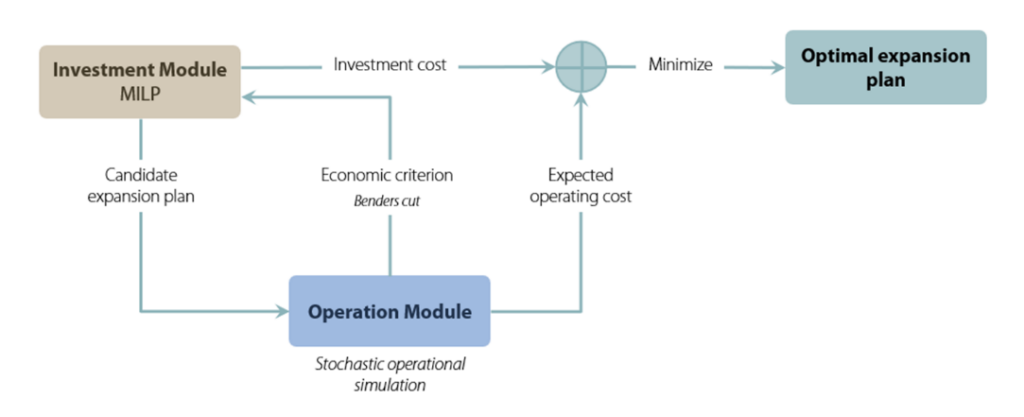
Figure 1 – OptGen optimization scheme
OptGen can also be applied as a hybrid system optimizer for isolated or grid-constrained localities, leveraging its ability to determine the least-cost expansion plan for any system — including small, single-load configurations typical of remote communities. Two modeling features are particularly critical in this context. The first is the representation of demand and generation variability through typical days: by grouping the hours of a given month into representative daily profiles, OptGen substantially reduces the computational burden of the optimization without sacrificing the temporal granularity needed to capture intra-day dynamics such as solar generation ramps and peak demand events. The second is the integration with the Time Series Lab (TSL), PSR’s renewable modeling tool, which generates synthetic hourly generation scenarios for wind and solar resources. TSL creates a synthetic hourly generation history by processing data from global reanalysis databases and produces future VRE scenarios that are temporally and spatially correlated with hydrological inflows. To do so, TSL has two main modules: TSL-Data, which builds the synthetic hourly renewable generation record from reanalysis data, and TSL-Scenarios, a statistical model that uses this history to generate future stochastic scenarios while preserving spatial and temporal correlations across all renewable stations. This ensures that the uncertainty in renewable output is properly represented across the many scenarios that OptGen evaluates, enabling robust investment decisions even in small, isolated systems where the consequences of sizing errors are most severe.
2.1 Pumped Storage Candidate Screening with HERA
While models such as SDDP are well suited to represent storage operation and expansion decisions at the system level, the identification of technically and economically viable pumped storage hydro (PSH) sites requires a complementary spatial and engineering tool.
In this context, the HERA software was developed by PSR to evaluate hydropower potential through a structured and computationally efficient process capable of analyzing thousands of alternatives. It supports basin-scale screening and preliminary design by integrating geoprocessing, hydraulic calculations, and cost estimation within a single platform.
For pumped storage applications, the software adopts a bottom-up screening methodology based on successive spatial filters. Starting from a broad area of interest, technical, environmental, regulatory, and topographic constraints are progressively incorporated, reducing the search space and prioritizing the most promising locations.
The methodology relies on high-resolution Digital Elevation Models (DEM) to automatically derive hydraulic head, reservoir geometries, and potential dam alignments. From these inputs, HERA generates schematic engineering layouts, including upper and lower reservoirs, waterways, powerhouse configuration, installed capacity, and preliminary construction cost estimates. The software can assess open and semi-open loop (connected to existing river systems), as well as closed-loop (off-river) configurations. After the filtering phase defines priority areas, an intensive search refines project layouts, optionally optimizing reservoir geometry to minimize barring costs.
By systematically linking territorial screening to preliminary engineering definition, HERA provides a consistent portfolio of technically feasible and economically screened hydropower and pumped storage candidates. These projects can then be incorporated into expansion and operational models, ensuring coherence between spatial feasibility analysis and system-level optimization.
Case Study: Large-Scale Storage Supporting Grid Flexibility
As discussed in the previous section, Brazil’s evolving electricity system is increasingly demanding services and capabilities that go beyond what traditional resources can provide. In this study, PSR examines the role of energy storage in delivering flexibility and firm capacity to the National Interconnected System.
The analysis draws on official data from Brazil’s Monthly Electric Operation Program (PMO) of February 2025, prepared by the National System Operator (ONS), with a simulation horizon extending through December 2029. All operational simulations were carried out using SDDP, which enabled hourly resolution runs across 400 scenarios — simultaneously capturing the variability of wind, solar, and hydrological inflows throughout the study period.
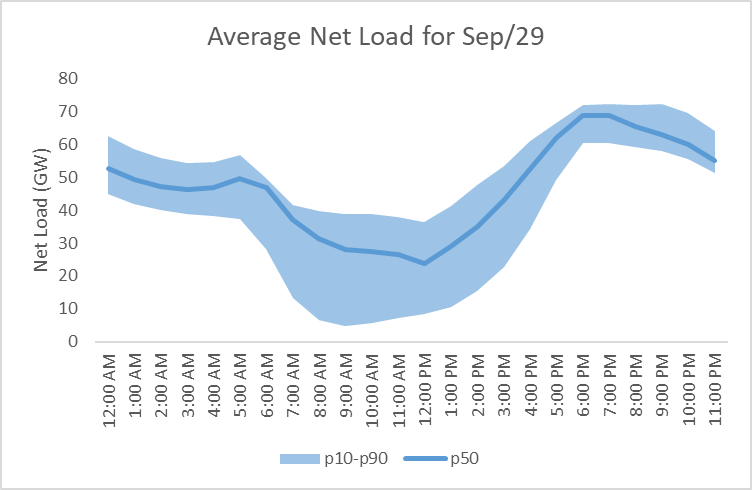
Figure 2 – Average net load in September 2029
To quantify flexibility requirements across different time horizons, PSR assessed the ramp-up needs for 1-hour, 4-hour, and 7-hour windows throughout 2029. Results show that while the annual average 1-hour ramp requirement is around 6 GW, critical scenarios (99th percentile) can push this to 18 GW — nearly triple the average. For 7-hour ramps, critical requirements can exceed 60 GW. These figures can surpass the current combined flexibility capacity of hydropower and thermal plants, which are further constrained by seasonal reservoir levels and operational restrictions.
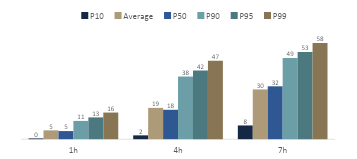
Figure 3 – Required flexibility in the SIN
To address this growing need, the Brazilian government plans to use capacity reserve auctions to contract flexible resources, with gas-fired thermal power plants currently among the main eligible technologies. While a balanced mix of resources is arguably the most robust long-term approach, a direct scenario comparison allows for a clearer evaluation of what each technology contributes — and at what cost — to system flexibility.
For this purpose, PSR assessed four distinct scenarios, with system costs computed by SDDP and comprising operating costs, energy deficit costs , and costs associated with violations of operating constraints, primarily water use constraints. Investment costs are not included in this comparison, focusing exclusively on the operational dimension. The scenarios are structured as follows: a Reference Scenario reflecting the current generation mix contracted for 2029, with expired power purchase agreements removed; Scenario B, which adds 32 GW of open-cycle gas-fired thermal plants to the reference configuration; Scenario C, which replaces the thermal addition with an equivalent capacity of short-duration storage in the form of lithium-ion batteries; and Scenario D, which similarly replaces the thermal plants with long-duration pumped-storage hydro. This structure allows storage technologies to be benchmarked directly against the thermal alternative that the government is currently considering for the upcoming auctions.
In all storage cases, the installed ESS capacity was set at 32 GW, distributed across the four submarkets. The costs resulting from all SDDP simulations are summarized in Table 1.
Results show that both storage technologies outperform the reference in terms of operating costs: 4-hour batteries reduced average system costs by R$ 1,958 million (13%), while 100-hour PSH delivered savings of R$ 2,298 million (nearly 16%). However, unlike thermal plants, ESS cannot generate energy autonomously when primary resources are scarce — meaning that in energy-deficit scenarios, storage alone is insufficient and must be complemented by firm generation. Taken together, the analyses confirm that energy storage systems are strong candidates for system expansion, provided they are combined with dispatchable resources.
¹ As the occurrence of energy deficits is undesirable, a penalty function can be incorporated into the mathematical model of hydrothermal dispatch in the objective function of the problem whenever there is a deficit. With this, the problem of hydrothermal dispatch becomes that of minimizing the operating cost plus the cost of penalizing the energy deficit over the entire planning horizon. Currently, this value is unique, regardless of the depth of the deficit, and is updated annually by Aneel.
Table 1 – Operating costs for expansion scenarios A, B, C and D
| Million R$ | Total Cost | Operating Cost | Deficit | Others |
| A – Reference Scenario | 14,619 | 9,233 | 1,302 | 4,083 |
| B – Scenario B | 14,019 | 11,405 | 0 | 2,613 |
| (B-A) | (600) | 2,172 | (1,302) | (1,470) |
| C – Scenario C | 12,661 | 8,845 | 958 | 2,858 |
| (C-A) | (1,958) | (388) | (345) | (1,225) |
| D – Scenario D | 12,321 | 8,764 | 881 | 2,676 |
| (D-A) | (2,298) | (469) | (422) | (1,407) |
Case Study: Hybrid Systems for Cost-Effective Decarbonization
As industrial and commercial consumers face mounting pressure to reduce their carbon footprint, the question of how to transition away from diesel generation without compromising supply reliability has become increasingly urgent. In this case study, PSR examines the economics and operational performance of hybrid energy systems, combining solar photovoltaic (PV), battery energy storage (BESS), and diesel generation, as a pathway to cost-effective decarbonization for self-producers.
PSR conducted the analysis for three locations in Brazil under two transmission scenarios: with and without grid access. Simulations were performed using PSR’s proprietary optimization tools (TSL, SDDP and OptGen) with 7-day typical period representations.
The study evaluates three technology configurations: a conventional diesel-only system (TPP), a fully renewable system combining solar PV and battery storage (PV+BESS), and a hybrid system integrating all three technologies (PV+BESS+TPP). Cost and technical assumptions were defined for each component based on established Brazilian benchmarks. BESS and solar PV were assigned capital and operating costs consistent with current market references, while the existing diesel fleet was treated as a sunk asset, with only variable costs considered. The analysis adopts a 15-year project horizon aligned with the expected BESS lifetime, standard efficiency and performance parameters for batteries and PV modules, and the official 2025 value for the cost of unserved energy.
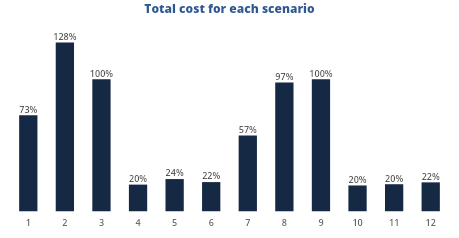
The main conclusions of the study are summarized as follows:
- Transmission grid access emerges as the single most important determinant of overall system cost and configuration. Grid-connected solutions consistently outperform isolated alternatives across all locations and load levels, highlighting the strong economic value of interconnection.
- Within grid-connected configurations, hybrid systems combining solar PV, BESS, and thermal backup provide the most robust and cost-effective solution, while fully renewable and diesel-plus-grid options also achieve comparable performance when transmission access is available.
- In contrast, isolated systems face a markedly different cost structure. The absence of grid support significantly increases required installed capacity and overall costs, and the economic viability of fully renewable off-grid solutions becomes highly dependent on local solar resource quality and variability.
- BESS plays a pivotal enabling role in hybrid architecture by time-shifting solar generation to evening peak periods, thereby reducing reliance on thermal generation, alleviating grid import constraints during peak hours, and avoiding costly capacity oversizing.
- Geographic differences in solar resource conditions have limited impact in grid-connected scenarios, as the grid effectively smooths variability and equalizes performance across locations. However, in off-grid configurations these differences become decisive, with solar resource availability and consistency emerging as the dominant drivers of techno-economic outcomes.
Conclusions
The analyses presented in this work demonstrate that energy storage is not a single solution but a versatile technology capable of addressing structurally distinct challenges within modern power sectors, from delivering flexibility and reducing curtailment in bulk transmission systems to enabling clean, cost-effective energy supply in isolated communities currently dependent on diesel generation. Across both dimensions, PSR’s modeling tools SDDP, OptGen, TSL, and HERA provide the analytical foundation necessary to evaluate, plan, and optimize storage deployment with the rigor that investment and policy decisions demand.
While Brazil offers a particularly compelling case study, the underlying dynamics are far from unique. Whether in emerging economies navigating the tension between rapid VRE expansion and grid adequacy, or in developed nations facing the retirement of dispatchable assets and the decarbonization of remote systems, the core challenge is the same: integrating variable generation while preserving reliability at least cost. The tools and methodologies presented here are designed precisely for this purpose, adaptable to different system configurations, regulatory contexts, and resource endowments, and serve as a replicable framework for any country seeking to maximize the value of storage in its own energy transition.