





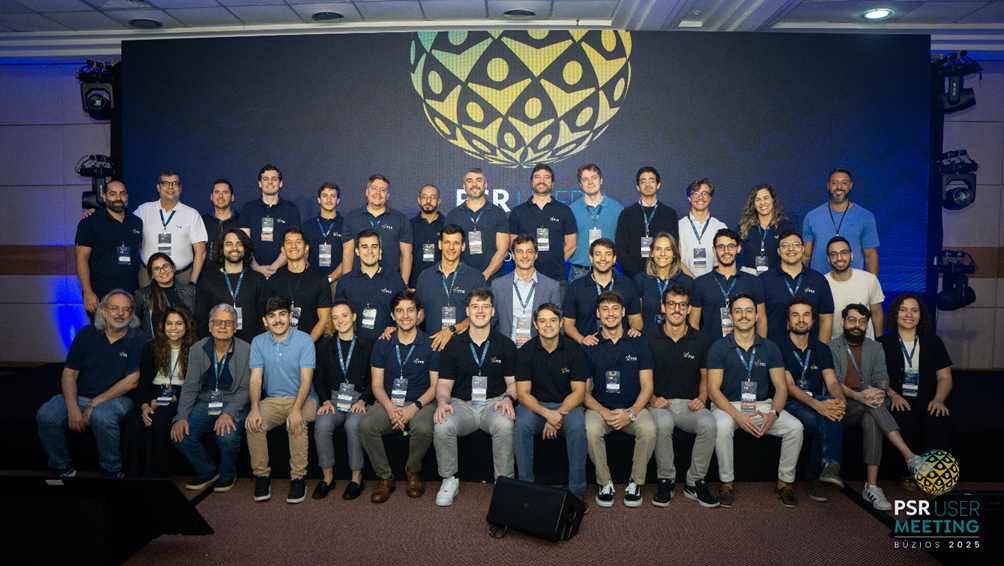
From May 18th to 22nd, PSR hosted the 2025 edition of its Global User Meeting in Búzios, Brazil. With over 170 participants from 20 countries across 4 continents, the event confirmed its role as a unique space for global dialogue on energy analytics. Attendees included clients, government agencies, system operators, consultancies, and research institutions. The entire PSR modeling and software development team was also present, enabling deep technical interaction and reinforcing the company’s commitment to fostering collaboration and engagement with its clients.
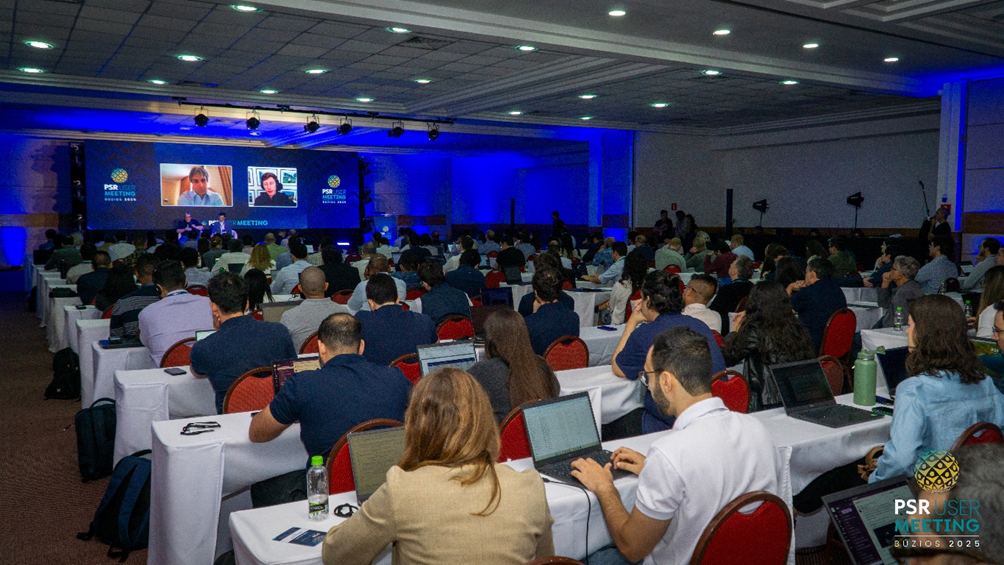
This year’s agenda was structured around three core themes. The first focused on navigating the energy transition, exploring how systems can remain resilient and flexible amidst rising renewable penetration, new energy carriers such as hydrogen, and growing geopolitical uncertainty. The second examined how energy planning must incorporate the impacts of climate change, moving beyond historical assumptions to probabilistic modeling of resource availability. The third emphasized the role of transmission infrastructure in supporting system flexibility and renewable integration, especially under increasing curtailment and congestion challenges.
Strategic opening: global challenges, SDDP 18 and PSRCast previews
The opening roundtable, led by PSR’s leadership — Mario Veiga Pereira (Founder and Chief Innovation Officer), Raphael Chabar (Executive Director), and Luiz Augusto Barroso (CEO) — welcomed international guests Rob West (Thunder Said Energy) and Ricardo Motta (CENACE Mexico). The session provided a global overview of the forces shaping the energy sector: from geopolitical instability and supply chain pressures to the evolving role of analytics in infrastructure investment and adequacy planning. These discussions laid the foundation for a technical program that reflected both strategic vision and methodological depth.
A key milestone of the event was the exclusive preview of SDDP 18, PSR’s unified platform for integrated energy planning. The new version brings together four modules — SDDP, OptGen, CORAL, and OptMain
— into a single modeling environment, enabling consistent and transparent analyses across time horizons and planning layers. A detailed overview of SDDP 18 is presented in a dedicated section of this Analytics Report.
Participants also had access to the sneak peek of PSRCast, PSR’s new deep learning-based platform for generating climate-informed resource availability scenarios. Built on global climate models and neural architectures, PSRCast produces high-resolution probabilistic forecasts for hydro inflows and renewable generation. The platform offers multi-timescale capabilities — from daily to multi-decadal horizons — and is being integrated with PSR’s modeling platform to support short- and long-term planning under structural climate shifts.
Modeling challenges and global applications
Over the following days, sessions addressed emerging modeling needs and innovations. Topics included the representation of climate non-stationarity in resource forecasting, the balance between model detail and computational scalability, and the development of large-scale datasets for complex systems such as those in Europe and the United States. Additional sessions focused on flexibility-enabling technologies, energy storage, transmission planning, and the integration of generation and grid expansion under increasing uncertainty.
A central feature of the event was the series of case studies shared by PSR’s clients. These presentations illustrated how tools like SDDP, OptGen, NCP, OptMain, and CORAL are being applied to tackle complex challenges across planning and operation. Highlights included expansion and adequacy assessments in hydro- and non-hydro-dominated systems, storage and hydrogen integration in renewable-rich regions, and climate-informed modeling of future scenarios.
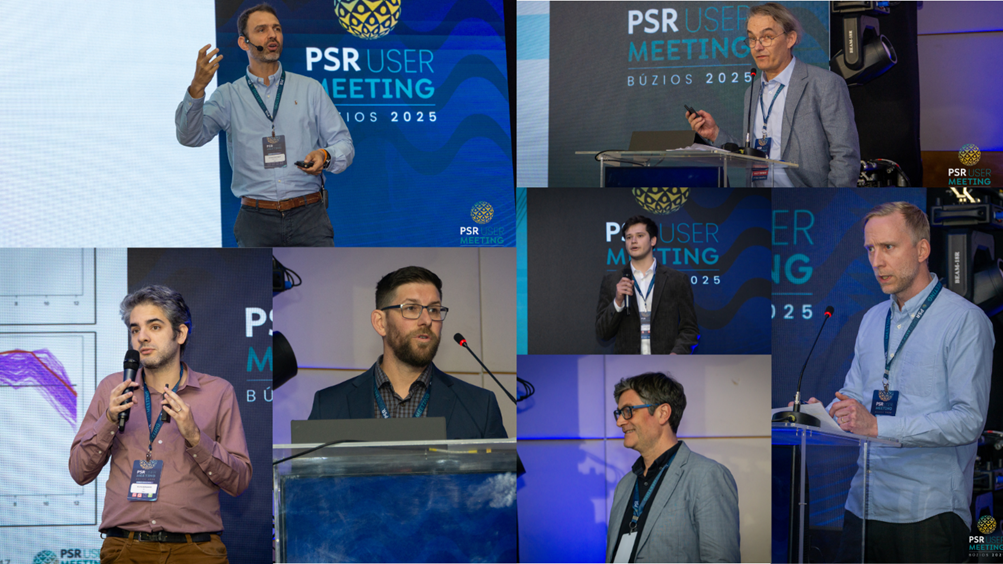
Institutions from North and Latin America, Europe, and Oceania presented projects on topics such as system reliability in isolated grids, renewable curtailment reduction, automation of calibration processes, and the use of stochastic optimization to support policy and investment decisions. The diversity of applications reflected the adaptability of PSR’s models across different regulatory structures, system topologies, and energy transitions.
Live tools, technical immersion, and hands-on learning
Beyond the plenary sessions, the agenda included practical workshops and demonstrations. Attendees participated in mini courses on modeling automation (PSR Factory), result visualization (PSRIO), renewable scenario generation (Time Series Lab), and high-performance computing (PSR Cloud). These sessions provided an opportunity for users to test new functionalities and discuss technical details directly with the teams who develop and support the tools.
Live tool demonstrations were available throughout the week, creating continuous opportunities for clarification, feedback, and exploration of modeling configurations.
Connecting people and modeling cultures
The presence of PSR’s full technical team enabled participants to clarify methodologies, validate modeling strategies, and provide direct input on tool evolution. More than a conference, the event functioned as a collaborative forum — where real-world problems were discussed with the developers who build the solutions.
Individual meetings between clients and PSR staff complemented the technical sessions, offering space for in-depth, personalized dialogue. These one-on-one conversations strengthened the trust-based relationship between PSR and its user community and reflected the company’s commitment to active listening and long-term collaboration.
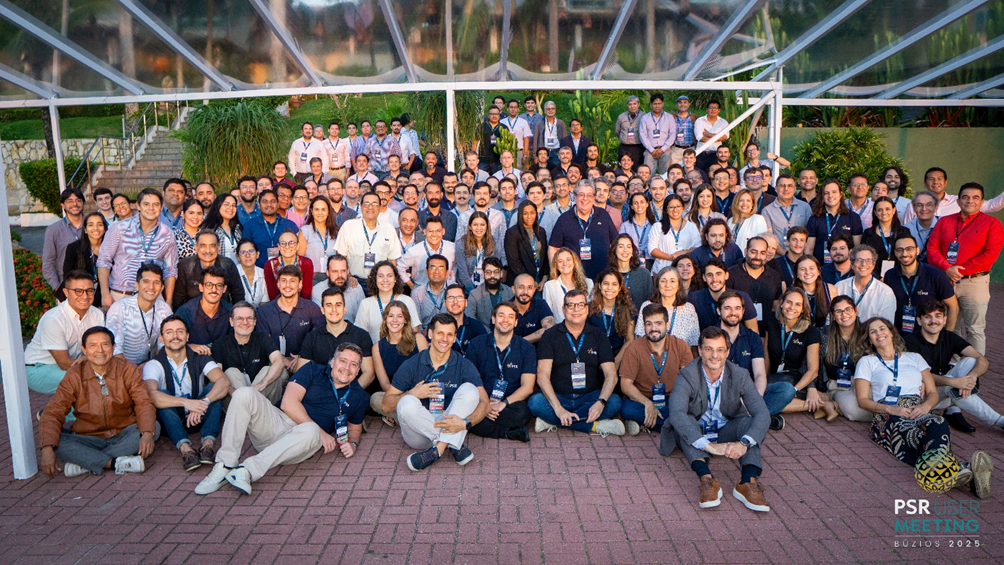
Networking also played a central role. Against the stunning backdrop of Búzios, attendees had the opportunity to connect in a relaxed and inspiring setting — exchanging perspectives on modeling choices, uncertainty treatment, and system-specific adaptations. These interactions helped strengthen a shared analytical culture across institutions and geographies.
Looking ahead
The 2025 PSR User Meeting confirmed the increasing convergence of global energy challenges and the growing demand for robust, transparent, and scalable modeling frameworks. Planning is already underway for the next edition — and we hope to see you there.
SDDP 18: Integrated Platform for Multi-scale Energy Planning
Released in July 2025, SDDP 18 introduces a significant evolution in scope. Built upon PSR’s well-known Stochastic Dual Dynamic Programming algorithm, the platform now integrates modules for operation (SDDP), expansion (OptGen), reliability (CORAL), and maintenance scheduling (OptMain) enabling consistent planning across multiple horizons and decision layers.
This shared framework allows the joint evaluation of operational policies, investment portfolios, capacity adequacy, and planned outages, all within a unified modeling environment. The approach also extends to multi-energy systems, allowing the co-optimization of electricity, natural gas, hydrogen, biomass, water, and synthetic fuels under uncertainty.
Transmission modeling was enhanced with support for AC/DC elements, FACTS devices, N-k security constraints, and integration with external tools. These improvements enable spatially detailed studies and evaluation of Grid-Enhancing Technologies (GETs) like DLR and power flow control.
Usability was also a focus in this release. A redesigned interface, centralized data structure, georeferenced visualization, and automated dashboards via PSRIO aim to simplify workflows. Integration with the PSR Factory Python API to automate data preparation and streamline execution workflows, and contextual documentation via the PSR Knowledge Hub further support productive and reproducible modeling.
A platform for planning and collaboration
The platform now offers a unified environment for configuring, executing, and analyzing models. Shared data structures support seamless transitions between operation, expansion, reliability, and maintenance studies.
Tabular editing, georeferenced visualization, and customizable dashboards improve transparency and analysis. PSRIO enables automated result reporting, while the PSR Factory Python API allows scripted workflows. The embedded Knowledge Hub provides integrated documentation and guidance.
Energy supply chains and co-optimization of carriers
SDDP 18 includes explicit modeling of energy supply chains — integrating producers, converters, storage, transport, and demand elements. This enables planners to represent infrastructure interactions and identify synergies across electricity and fuel sectors, such as Power-to-X strategies or coordinated storage across carriers.
Enhanced power network modeling
New features allow for realistic power flow modeling in systems with high renewable penetration. These include AC/DC components, FACTS devices, N-k dispatch constraints, and improved loss modeling. Compatibility with tools like PSS®E and support for GETs expand the platform’s applicability to modern grid planning.
OptMain: Optimal Maintenance Scheduling
OptMain is a new module that optimizes maintenance schedules using risk-based criteria. It replaces simplified derating with explicit modeling of outages, respecting constraints such as ramp limits, precedence rules, and critical periods. OptMain supports planners and system operators in aggregating, coordinating, or rescheduling maintenance with consistency across operation and expansion contexts.
Other modeling improvements
Key updates include dynamic solver convergence for MIP problems, unit-based modeling of all power plants, multi-block generation offers, improvements in generic variable and constraint support, hourly maintenance for renewables and DC links, Markov-based uncertainty representation, and integration of user-defined DLR scenarios.
Final remarks
SDDP 18 consolidates its position as a flexible and robust platform for integrated energy planning. By combining advanced modeling capabilities with improved usability and automation, this version supports technically consistent studies — from national policy to operational coordination — across sectors and timeframes. For more details, visit the SDDP 18 Release Site.