




Overview of Grid-Enhancing Technologies
The global energy landscape is undergoing a profound transformation, largely driven by the imperative to decarbonize and integrate a growing share of renewable energy sources such as wind and solar power. However, these changes introduce significant challenges, particularly concerning the flexibility and robustness of transmission networks to accommodate the intermittent nature of these energy sources. In this context, the need for efficient, safe, and flexible operations in electrical grids becomes critical. The North American motto “no transition without transmission,” emphasizing the essential role of modernized and adaptable transmission systems in the energy transition.
Many of the technologies used in transmission networks were developed over 100 years ago. They were effective for a long time but were not designed to handle today’s reality, with renewable energy sources that depend on uncertain conditions and whose output varies with the weather, time of day, and season. Without a grid capable of adapting quickly, we face waste, overloads, and instability. That’s why Grid Enhancing Technologies (GETs) are emerging as an alternative.
GETs are modern hardware and software solutions that make the grid more flexible, efficient, and resilient by making better use of existing infrastructure and reducing the need to build new lines. In the February 2025 edition of the Energy Report, we have presented an overview of the advances of GETs, including FACTs, Dynamic Line Rating, Batteries, etc. and proposed guidelines to incorporate them into the planning of our transmission system, in order to make it more reliable, flexible and economical. This article delves into one pivotal case study that illustrate how those innovative solutions can reshape energy infrastructure in Colombia. The study showcase how technological advancements and strategic planning are crucial in building a more resilient and adaptable energy infrastructure. The methodology applied in this case study leveraged advanced analytical tools and modeling techniques to tackle the complexities of integrating new technologies into power system planning and operation.
Incorporating GET in planning and operation models
GETs can play an important role in modernizing the electricity sector. Therefore, it is essential to include both traditional equipment and GETs in the same planning analysis portfolio and decide which equipment (or combination of equipment) brings the best cost-benefit to the system.
In turn, these improvements in the planning process require investing in new methodologies and more sophisticated analysis methods. On this topic, PSR has been working on three fronts in its transmission planning models and studies.
1. Operational Modeling
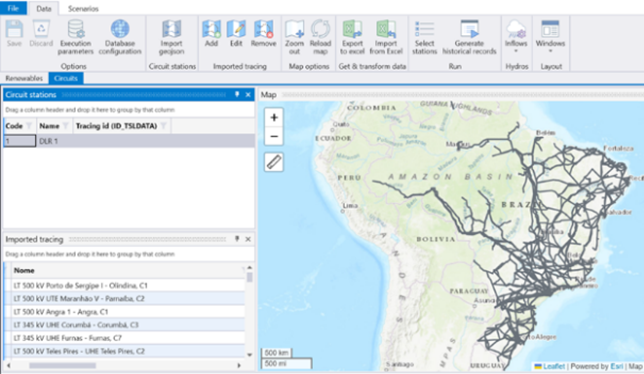
The SDDP stochastic operating model includes a detailed representation of the transmission networks, incorporating losses and security-constrained optimal dispatch. Additionally, advanced equipment such as batteries, Dynamic Line Rating (DLR), and FACTS are integrated into the model to simulate their impact and optimize system operation while considering transmission constraints. For DLR, through the integration with the Time Series Lab (TSL), capacity scenarios for transmission lines are generated based on the actual geographical path of each circuit.
2. Candidate Screening
Methodologies were developed to estimate the marginal benefit of each technology and filter out the best candidates. This avoids analyzing an unmanageable number of equipment-location combinations by selecting only those with favorable benefit-to-cost ratios.
3. Planning Model
A Benders decomposition-based planning model is used to choose the optimal set of investments by balancing operational savings against capital costs. The decomposition scheme allows the use of separate optimization algorithms for the investment and operation module and leverages on SDDP’s operating features. This process compares GETs with other traditional solutions to identify the most cost- effective transmission expansion plan.
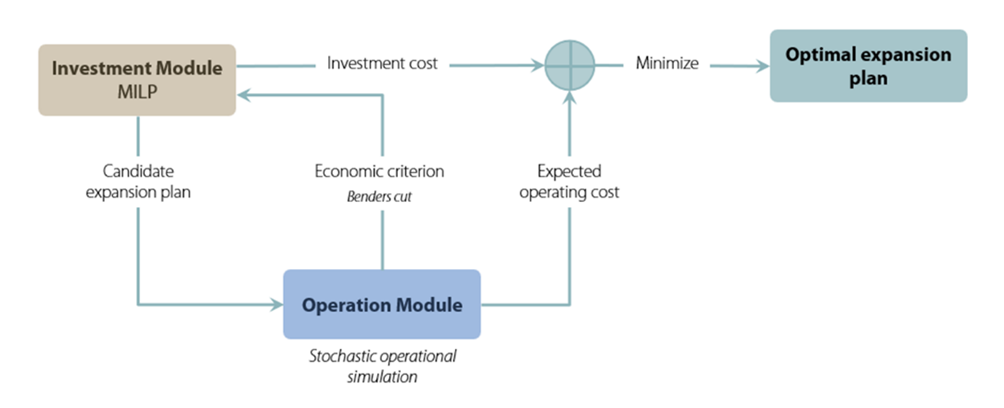
These methods and methodologies have been applied in studies of countries with strong growth and penetration of renewables, such as Colombia, Mexico, Ecuador, Central America, Bolivia and Brazil. The results of a case study with the Colombia system are presented below.
Case Study: Flexible transmission expansion in Colombia
The primary objective of this case study was to determine transmission expansion plan for the Colombian transmission grid considering conventional and GETs (batteries and FACTs). The approach involved a detailed analysis of the system, using SDDP, candidate screening for FACTs and Batteries and the benders decomposition planning model to evaluate the transmission infrastructure needs of the country until 2035.
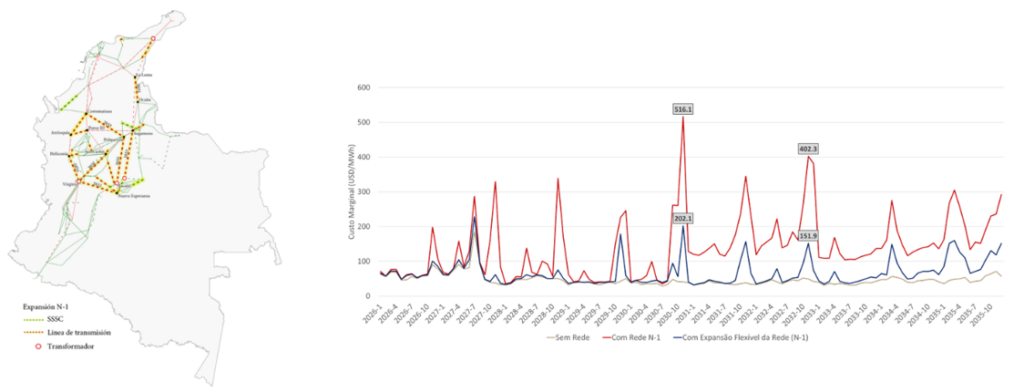
In this study, the optimal planning considered a SSSC-type FACTS equipment in addition to conventional equipment (lines and substations) to solve the problems of network restriction in this horizon. The image below presents the transmission lines, substations and FACTs that had to be deployed (left) and the estimation of the marginal costs (right) of the system before (red line) and after (blue line) the expansion of the grid. At the end of the expansion, a reduction of approximately 8% was achieved in terms of operating and investments costs.
The images below illustrate the operation of one of the SSSCs selected in this planning study. The first image depicts the power flow in a certain region of the 230 kV transmission grid without the SSSC. In this case, the flow follows the red arrows from the La Mesa substation toward the San Mateo substation to supply industrial loads in the area. However, there is a congestion issue along this section of the 230 kV network that could result in load curtailment.
The second image shows the operation of the SSSC selected by the planning model to address this issue. An SSSC was installed on the La Mesa – Balsilla transmission line and operates such that, during periods of congestion (as seen in the previous image), power flow is redirected to less-loaded 230 kV transmission lines, as indicated by the red arrows in the second image. This ensures reliable power delivery to the San Mateo region and allows continued service to local consumers.
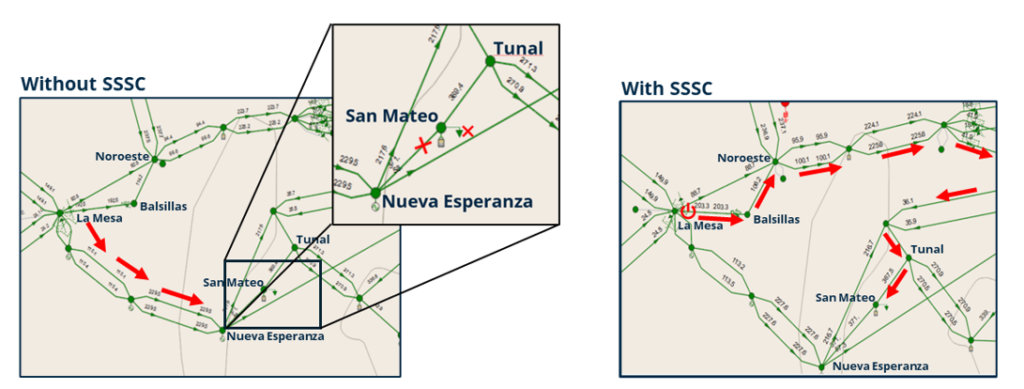
Hence, the placing FACTS equipment in the upper ring of the San Mateo-Nueva Esperanza line successfully redirected power flow and deferred the need for conventional transmission line duplication. This case study demonstrated how targeted technological interventions could yield substantial operational and financial benefits, offering a smart solution for managing grid constraints while deferring costly infrastructure investments.
Conclusions
The success of the energy transition is intrinsically linked to the modernization of transmission planning and operation. Grid-Enhancing Technologies (GETs) offer a unique opportunity to unlock the full potential of the existing infrastructure, enabling a smarter, more reliable, and flexible power system. To fully realize these benefits, it is essential to adopt advanced planning methodologies and tools capable of capturing the value of these technologies. As the electricity sector evolves, the integration of GETs into planning processes will be key to building a resilient, cost-effective, and sustainable grid that supports both current needs and future challenges
The case studies of GETs in Colombia underscore the critical role that innovative technologies play in enabling the energy transition and how these equipment can be part of a transmission planning analysis. In this case, the strategic integration of Flexible AC Transmission Systems (FACTS) has demonstrated the tangible benefits of improving grid flexibility, optimizing resource utilization, and enhancing overall system reliability.
In conclusion, the integration of GETs and the development of flexible, resilient, and interconnected grids will be essential for enabling a sustainable and reliable energy future. The Colombian case study serves as a valuable example of how those GETs can be incorporated in transmission planning methodologies to address the challenges of energy transition, ensuring that the systems can be capable of accommodating increasing demand and higher shares of renewable energy in the years to come. These initiatives not only offer immediate operational benefits but also set the stage for a more secure, efficient, and decarbonized energy system in the future.