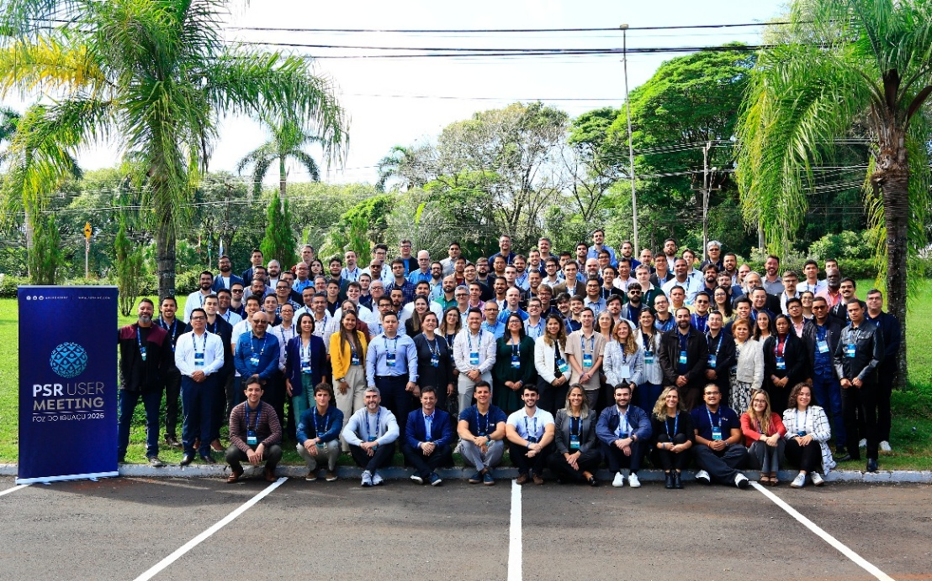





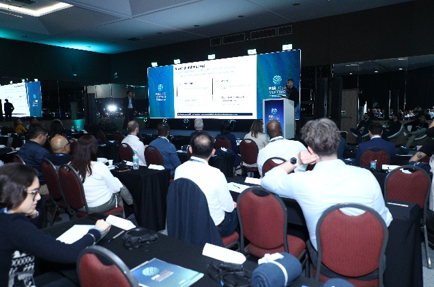
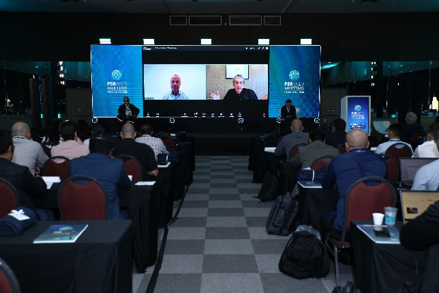
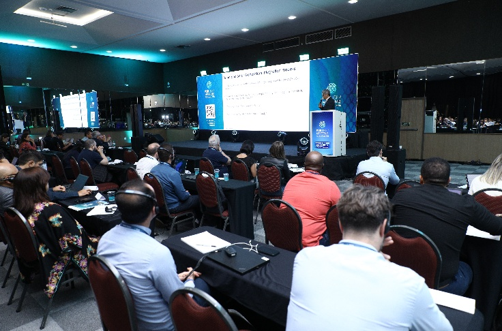
From May 24th to 29th, PSR hosted the 2026 edition of its Global User Meeting in Foz do Iguaçu, Brazil — a setting that could hardly be more symbolic for a community dedicated to energy analytics, at the meeting point of three countries and next to one of the world’s largest hydroelectric plants. The event gathered 90 participants from 16 countries and 46 organizations, joined by 54 specialists from PSR’s own team. With representatives from Latin America, North America, Europe and Oceania — including system operators, regulators, planning agencies, utilities, market participants, consultancies, universities and development institutions — the meeting consolidated its role as an international forum for technical exchange, combining formal sessions with informal interaction to strengthen collaboration across the energy community.
AI and complexity: the threads running through the week
The 2026 program was built around real challenges faced by the institutions in the room, connecting those problems to methodologies, models and computational solutions that support decisions in increasingly complex environments. Two central themes ran through the entire week.
The first was artificial intelligence and analytical workflows, examined from both sides of the equation. As a new driver of demand, AI brings data centers and large flexible loads to the core of the planning agenda. As a source of opportunity, the program traced the evolution from neural networks and deep reinforcement learning to generative AI, reasoning models and agents, and showed what this means in practice: agents interacting with planning models through MCPs and chatbots, GPU-accelerated solvers for large-scale optimization, AI-assisted demand forecasting, and a new generation of workflow automation that accelerates the development of analytical solutions and changes how users interact with models, data and results.
The second was the increasing complexity of power systems: renewable integration down to sub-hourly variability, security of supply and resilience in renewable-dominant systems, climate change in expansion planning, transmission modernization, hydrothermal operation, the value of coordinated operation, and market design transitions under decarbonization and geopolitical uncertainty — all connected directly to planning, operation and investment decisions being taken today.
Strategic opening: energy, geopolitics and intelligence
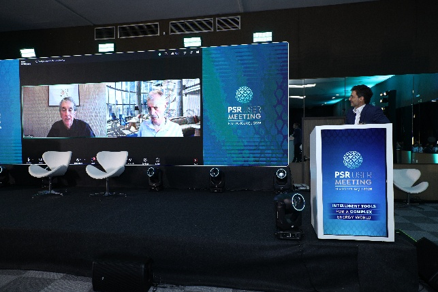
The opening plenary set the tone for the week with a broad strategic discussion on the forces reshaping energy systems worldwide. After welcome remarks by Raphael Chabar, PSR’s Executive Director, the session brought together keynote perspectives from Rob West, founder of Thunder Said Energy; Pascal Van Hentenryck, head of Gurobi’s AI Innovation Lab and Director of the US NSF AI Institute for Advances in Optimization at Georgia Tech; and Mario Veiga Pereira, PSR’s founder and creator of the SDDP algorithm.
The discussion placed artificial intelligence at the center of the sector’s strategic agenda — and on both sides of it. Rob West described what he called an “AI energy transition,” in which solar, batteries, robotics and AI reinforce one another: data centers are driving electricity demand growth at a pace not seen in decades, but AI deployed across industrial assets and grid operations can unlock efficiency gains and additional capacity from existing infrastructure of comparable magnitude. Pascal Van Hentenryck and Mario Pereira connected this to the analytical challenge: power systems must now co-optimize generation, transmission, storage and demand under deepening uncertainty — from climate-driven hydrological volatility to geopolitical fragmentation — which raises the bar for optimization methods and decision-support tools alike.
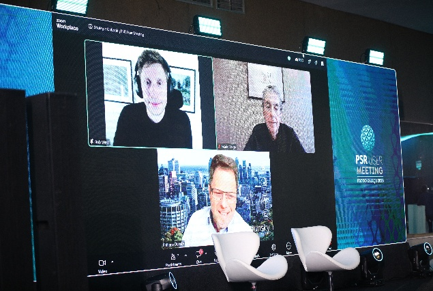
A second block broadened the conversation to climate, planning and market design. It opened with a deliberately provocative video by Dave Borlace, creator of Just Have a Think, one of the world’s most-watched independent channels on clean energy and climate — presenting recent research on accelerating warming and rising tipping-point risks as a trigger for debate. Mario Pereira and Philippe Dunsky, founder of Dunsky Energy + Climate Advisors and chair of Canada’s Electricity Advisory Council, reacted with their views on what these climate signals mean for decision-making, planning and the analytical tools the sector relies on. The live discussion, moderated by Raphael Chabar, then had Ricardo Mota Palomino, former Director General of Mexico’s CENACE, on stage, and Anders Kringstad, Director for Long-Term Market Analysis at Norway’s Statnett, connected remotely — reacting to video perspectives from Luiz Augusto Barroso, PSR’s CEO, on planning and institutional decision-making; Rodrigo Moreno, of the University of Chile and Imperial College London, on transmission expansion in Latin America; Carlos Batlle, of Comillas University and MIT, on electricity market design; and David Victor, of UC San Diego, on geopolitics and the energy transition. The result was a panorama that balanced strategic vision with methodological substance — and that framed the technical program of the days that followed.
SDDP 19: the new generation of the SDDP Platform
The session dedicated to PSR’s analytical tools opened with a clear diagnosis of how much the modeling challenge has changed: renewables have multiplied variability and uncertainty in virtually every system — no longer only in hydro-dominated ones; transmission bottlenecks proliferate as generation moves to where the resources are; data centers and large flexible loads introduce demand dynamics never seen before; and the operational detail required by studies has outgrown traditional tools and workflows. Against this backdrop, PSR presented SDDP 19 — the new generation of the SDDP Platform, an integrated environment connecting long- and short-term operation planning, expansion planning, transmission-aware analysis, data management, visualization and collaborative workflows.
A major highlight was NCP 7.0. PSR’s short-term dispatch tool — used for decades in control centers of several countries for day-ahead and week-ahead scheduling with redispatch, and long integrated with SDDP — now becomes part of the SDDP Platform, detailing SDDP’s mid- and long-term results down to operational granularity. With configurable resolution from sixty minutes to one minute, NCP adds a layer of operational detail beyond the hourly resolution — intra-hour solar ramps, battery arbitrage, reserve activation — with unit-level hydro representation, detailed thermal constraints and hybrid renewable-plus-storage plants, across three complementary use cases: day-ahead scheduling, intra-day redispatch and near-real-time balancing. Its full methodological consistency with SDDP — including water values and other medium- and long-term strategic decisions passed directly from SDDP’s stochastic policy — connects the long-term policy to minute-level execution within a single analytical chain.
The session also introduced Foresight, PSR’s new demand forecasting tool, covering three horizons — long-term for expansion planning, mid-term for price and market studies, and short-term hourly forecasting for operations — with systematically benchmarked statistical models, segmentation by consumption class, macroeconomic and climate drivers, and the ability to represent emerging loads, from electric vehicles to data centers, for which no historical series exist.
SDDP itself, the operation planning tool, received important methodological and computational advances: a penalty-free formulation based on feasibility cuts, which detects true infeasibilities while preserving consistent price signals; explicit inertia constraints, bringing frequency response into dispatch and investment decisions; refined battery representation with cycle counting, cycling limits and self-discharge; and a redesigned cut management engine delivering substantial performance gains on large-scale cases. OptGen, the expansion planning model, now explicitly represents data centers and large flexible loads, incorporates technology degradation to avoid biased investment choices, and automatically calculates the firm capacity of renewables — capturing how the capacity contribution of each technology changes as penetration grows and peak hours shift — alongside convergence improvements, network reduction and integration with PSRPlot dashboards.
Transmission received special attention, reflecting its new role as a central constraint on energy transition. Building on the platform’s detailed network representation available since SDDP Platform 18 — AC elements, transformers, FACTS devices, DC links and dynamic line ratings —, the NetPlan algorithms and modules, applied for decades in transmission studies and in which PSR has deep, long-standing expertise, are now incorporated into the SDDP Platform: OptNet for least-cost transmission expansion, OptFlow for network-constrained optimal power flow, and OptVAr for reactive power and voltage support assessment. Energy Map will be the platform’s new georeferenced visualization tool, conceived from the ground up for complex, large-scale networks, with single-line diagrams, layered result analysis and map-based editing.
The user experience also took a leap forward. The new Time Series input format accepts free-form CSV files with flexible structures, sparse and periodic dates and date patterns, automatically converting data between resolutions; PSRIO consolidates its role as a high-performance business intelligence tool for simulation outputs; PSRPlot brings a fully integrated charting and dashboard experience; the new PSR Knowledge Hub reorganizes documentation around products and learning paths, with improved search and video tutorials; and the SDDP Data Manager brings version control to SDDP cases — historical versions, change tracking and collaborative sharing — making studies more traceable and reproducible. Deep-dive demonstrations later in the week allowed participants to explore these capabilities directly with the teams that develop them.
Artificial intelligence takes center stage
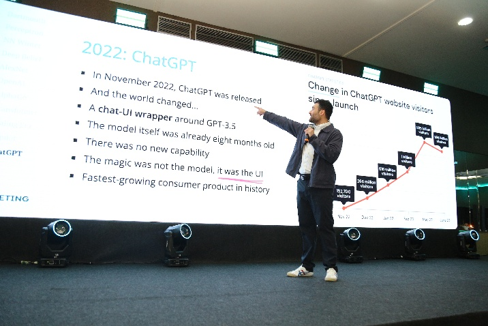
If one theme defined this edition, it was artificial intelligence. A dedicated session — linking back to the strategic discussion that opened the week — presented AI as a new interaction and orchestration layer for advanced analytical models: not replacing mathematical optimization, simulation and expert judgment, but expanding how we formulate problems, create software, explore results and automate workflows.
The session was built as a progression. It began with a retrospective of how AI got to where it is — from its origins through neural networks and deep reinforcement learning to today’s generative AI, reasoning models and agents — giving every participant the context for the discussions that followed, and connecting this trajectory to PSR’s own research, including GPU-based algorithms for large-scale optimization developed in collaboration with NVIDIA. From there, the program moved to an experiment posed as a challenge: can an AI agent learn to operate a hydrothermal system? Given access to domain capabilities exposed through MCP, but no dedicated optimization algorithm, a reasoning agent explored the system, estimated water values and built its own operating policy — arriving remarkably close to the performance of dedicated stochastic optimization. The message was architectural rather than triumphal: the value lies in placing AI inside the analytical loop, orchestrating trusted models, not in replacing them.
The final block brought these paradigms to day-to-day practice. PSR presented the expansion of the SDDP Platform experience through AI — chatbots, retrieval-augmented documentation, MCPs and reasoning workflows supporting everything from data queries to simulation execution and result analysis — and a client showed its own MCP-based application connecting SDDP and NCP to support short-term operational decision-making, a sign that users are not waiting to build on these capabilities.
Planning for complexity: transmission, data centers, hydro and beyond
If artificial intelligence was the first thread of the week, the second — the increasing complexity of power systems — ran through a sequence of technical sessions in which PSR’s teams showed how that complexity translates into methodology and studies.
Transmission had a dedicated session, moving from the platform’s grid-aware capabilities to applied studies: an integrated workflow combining expansion planning with detailed electrical studies, illustrated by a binational interconnection assessment that carried stochastic dispatch scenarios all the way to AC power-flow validation; and a dynamic line rating study showing how explicitly modeling weather-dependent transmission capacity, within the same stochastic framework, can unlock significant additional capacity from existing lines and reduce supply risk — a concrete example of analytics extracting value from infrastructure that already exists.
Data centers and large flexible loads — the demand side of the AI story — received a session of their own, covering the Brazilian and international context, the technical and regulatory challenges of connecting these loads, and an integrated methodology using SDDP and OptGen to identify optimal connection points and expansion and operation strategies, including the representation of elastic demand, flexible demand and large demand blocks.
Hydro, a foundation of the community since its origins, returned with a forward-looking agenda centered on HERA, PSR’s environment for planning hydroelectric reservoirs and pumped-storage plants. A session on customized solutions showed how PSR’s analytical core extends beyond the power sector itself, with applications built for client-specific decisions in gas logistics, biofuels, green hydrogen and steel production.
Finally, the value of coordinated operation and integrated planning anchored the discussion on decision-making. PSR presented its System Operator Value methodology — applied with national system operators in Brazil and Mexico to quantify, through counterfactual scenarios, the value that coordinated operation creates for society —, a strategic initiative on integrated generation and transmission expansion planning for the Brazilian system, a climate-aware expansion study for Colombia, and an analysis of the impact of representing renewable uncertainty stochastically rather than deterministically — evidence that modeling choices change decisions.
Client cases and international experiences
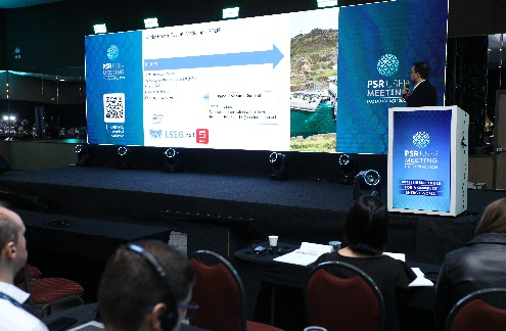
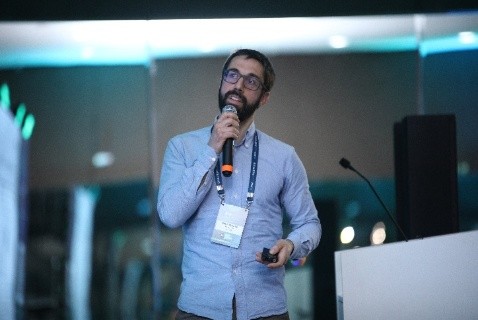
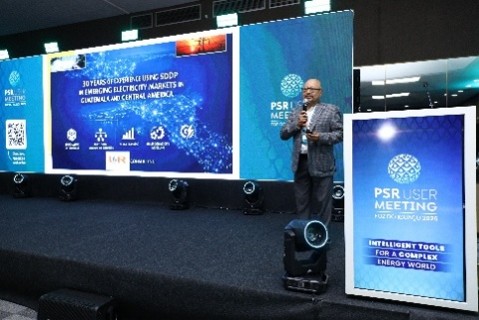
As in every edition, the heart of the User Meeting was the series of case studies presented by PSR’s clients. System operators, planning agencies, regulators, utilities, generation and trading companies, and consultancies — shared how PSR’s tools support real planning, operation and investment decisions. Taken together, the presentations covered the full spectrum of challenges facing modern power systems: grid evolution and decarbonization studies in Canada and New England; the implementation of SDDP by the Norwegian TSO and applications in Nordic markets; planning for a system operating with nearly fully renewable generation in Costa Rica; regulator-reviewed generation and transmission expansion planning cycles in Honduras; a long-term recovery and expansion plan for the Venezuelan power system; portfolio risk analysis integrating hourly generation and price forecasts in Brazil; investment-intelligence workflows delivering capture-price analysis on demand; battery revenue modeling in New Zealand; operational flexibility and ramping in Bolivia; hydroelectric potential assessment and floating solar on shared river basins; an AI-enabled user application connecting MCP, SDDP and NCP for short-term operational decision-making in Guatemala; and three decades of experience applying SDDP in Central America’s emerging markets. The diversity of contexts confirmed, once again, the adaptability of PSR’s analytical framework across regulatory structures, system topologies and stages of the energy transition.
These presentations also resonated strongly in the event evaluations. Participants repeatedly pointed to the user and international cases as among the most valuable content of the week — in the words of one attendee, seeing the tools applied in real companies, generating value and opportunity, is the best possible demonstration of their worth. The exchange of experiences between countries and institutions was singled out as one of the event’s defining strengths, with many participants leaving with ideas drawn directly from their peers’ presentations. And the growing appetite was visible on both sides of the stage: the number of client presentations more than doubled compared to the previous edition, and when asked about future editions, participants asked for even more space for user presentations.

Technical visit to Itaipu: a landmark experience
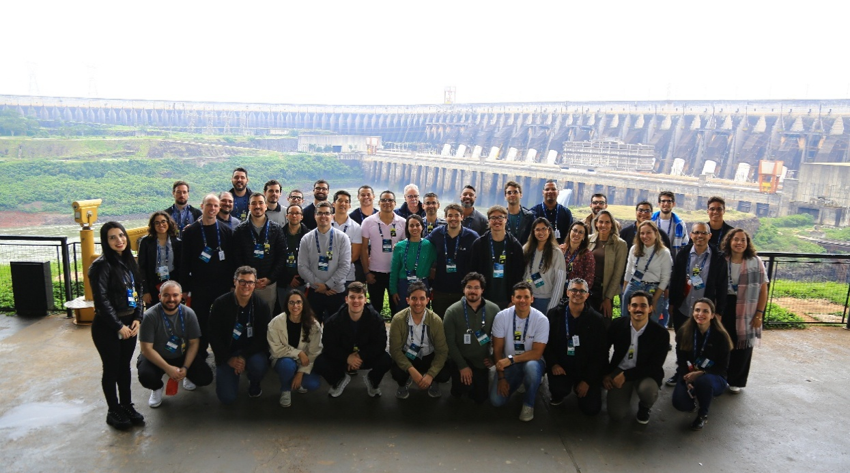
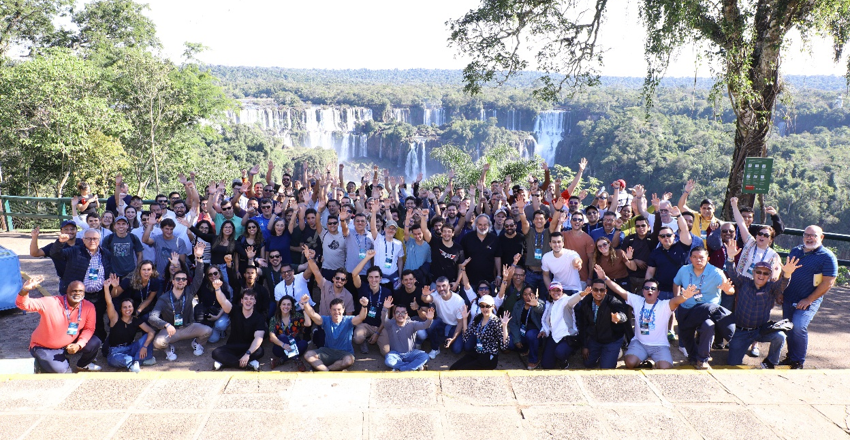
Among the most memorable moments of the week was the technical visit to the Itaipu hydroelectric plant. Walking through one of the world’s most important hydropower assets — a plant that many participants have represented in their models for years — gave the community a rare opportunity to connect analytical practice with physical reality, observing at first hand the scale, engineering and operational context behind the data. The visit was repeatedly mentioned by participants as a high point of the event, and a fitting complement to a program in which hydro reservoirs, pumped storage and floating solar were recurring technical themes — including a case study presented by Itaipu Binacional itself. The on-site program was completed by visits to the Three Borders Landmark and to the Iguazu Falls, which offered participants shared experiences outside the conference room and reinforced the spirit of community that distinguishes the User Meeting.
Direct dialogue: talk with experts, software stands and one-on-one meetings
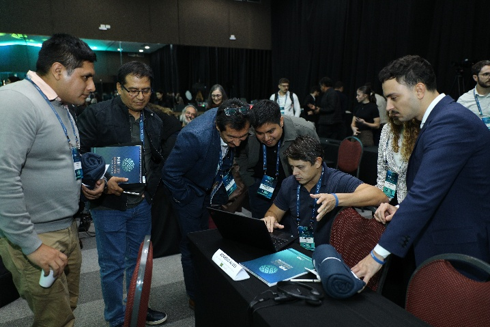
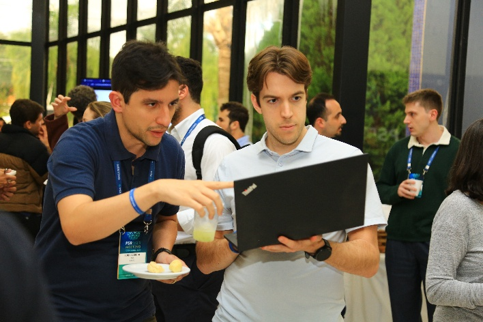
Beyond the plenary sessions, the agenda was designed to maximize direct interaction. Daily “Talk with Experts” sessions organized thematic tables around SDDP, OptGen, NCP, NetPlan, HERA, OptFolio and user requests, where participants discussed modeling approaches, customizations and new ideas directly with PSR specialists. Software stands during coffee breaks offered continuous live demonstrations, and individual meetings between clients and PSR staff provided space for in-depth, personalized dialogue. More than a conference, the event once again functioned as a collaborative forum — where real-world problems are discussed with the developers who build the solutions, and where users directly influence the future roadmap of the tools.
The view from the audience
The feedback collected at the end of the event was strongly positive across the board. Participants’ evaluations placed overall satisfaction and willingness to recommend the event at the very top of the scale, with expectations widely exceeded. The technical quality of the content and the level of the speakers were the most praised aspects, together with the organization, the simultaneous translation and the social and technical program. The artificial intelligence session stood out as the most valued content of the week, and the international client cases were celebrated as proof of the value the tools generate in practice. Perhaps the most telling result: most participants stated that they intend to apply something they learned — new tools, AI-enabled workflows or new modeling approaches — in their work within the next few months.
Roadmap and closing
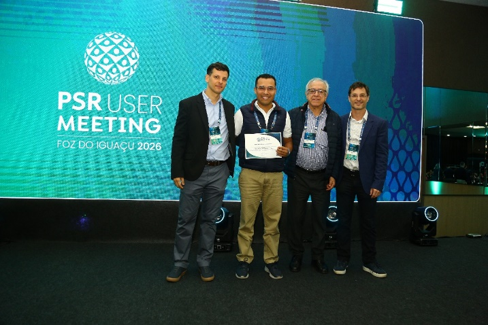
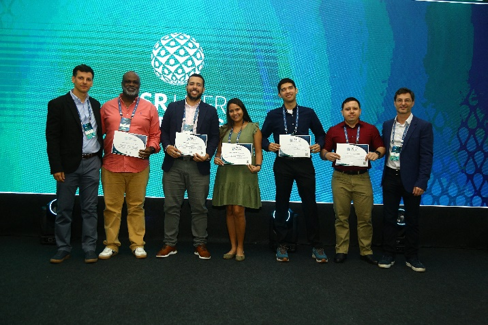
The closing session presented PSR’s development roadmap organized around three fronts: streamlined execution and workflow automation; new modeling features and methodological advances in SDDP, OptGen, NCP and Time Series Lab; and new platforms and strategic applications. A structured interaction with the audience collected priorities and suggestions directly from users — input that will shape development decisions in the coming cycles — before the delivery of certificates and the final remarks from PSR’s leadership.
See you in 2027
The PSR User Meeting 2026 confirmed the strength of a global community that shares not only tools, but a common analytical culture — and a common ambition to plan and operate energy systems better in an increasingly complex world. Planning for the 2027 edition is already underway, and we warmly invite all clients, partners and friends of PSR to join us for what promises to be another week of technical exchange. We hope to see you there.
In the meantime, the conversation continues: the next issues of the Analytics Report will feature dedicated articles exploring, in depth, the main topics presented at the PSR User Meeting 2026 — from SDDP 19 and the new platform capabilities to artificial intelligence in energy modeling and the client experiences shared during the event. Stay tuned!